






Key Answer: On April 1, 2026, Drift Protocol lost $285 million within minutes after an attacker combined fake token creation, oracle manipulation, and a compromised admin key to drain its Solana-based DeFi vaults. A hardware wallet protects your private keys — but not funds already deposited into a DeFi protocol, which are subject to that protocol's security.

30-Second Summary
What you need to know
- $285M gone within minutes: Attacker created a low-cost fake token, inflated it via wash trading, then used a compromised admin key to drain Drift Protocol's vaults in dozens of rapid withdrawals
- Primarily a governance failure: The exploit targeted oracle trust, admin key security, and insufficient delay mechanisms — the core issue was governance architecture, not a traditional code vulnerability
- Suspected North Korea connection: According to Elliptic, the attack pattern is consistent with tactics associated with suspected DPRK state-sponsored threat actors
- Your wallet ≠ protocol security: A hardware wallet protects keys you hold — it cannot protect assets you've deposited into a third-party protocol's smart contracts
- What you can control: Keep core holdings in self-custody, verify every transaction on your device screen before signing, and minimize idle funds left in DeFi protocols
What Happened to Drift Protocol on April 1, 2026?
Drift Protocol is a Solana-based decentralized perpetuals exchange, operating as a non-custodial platform where users deposit assets into smart contract vaults to trade leveraged positions. At the time of the attack, it held more than $500 million in total value locked (TVL).
According to CCN's coverage of the incident, the attack unfolded in three coordinated phases starting in the early hours of April 1, 2026. Within minutes and dozens of separate withdrawal transactions, the attacker drained approximately $285 million — primarily in USDC, JLP, and other tokens held in Drift's vaults. More than half of the protocol's TVL was eliminated before the team could respond.
Drift Protocol's team confirmed the exploit publicly shortly after the attack. The protocol was paused, and an investigation was launched. As of publication, funds have not been recovered.
This was the largest DeFi exploit of 2026, and one of the largest in the history of decentralized finance.
How Did the Attacker Steal $285 Million? A 3-Step Breakdown

The attack was not a brute-force hack or a code exploit in the traditional sense. It was a precision strike against three interconnected trust assumptions that Drift's architecture relied upon.
Step 1: Create a low-cost fake token — then make it appear worth much more
The attacker minted a large supply of a low-liquidity token at minimal cost (reportedly just hundreds of dollars). Using wash trading — buying and selling the token with controlled accounts — the attacker artificially inflated the apparent market price of the token on decentralized exchanges. This created a false signal in on-chain price data.
Step 2: Manipulate the oracle — trick the protocol into misreading asset values
DeFi protocols use price oracles to determine the value of collateral. Drift's oracle system read the inflated token price as legitimate. With the manipulated oracle treating the nearly worthless token as highly valuable collateral, the attacker was able to take out borrowings far beyond what any real asset would support — a classic oracle manipulation attack.
Step 3: Use a compromised admin key to drain the vaults directly
In the final phase, the attacker used what investigators believe was a compromised admin key — a privileged credential that granted direct access to Drift's vault withdrawal functions. According to Unchained, timelocks and circuit-breaker mechanisms on admin functions were either absent or failed to activate, meaning no meaningful delay was enforced between the decision to withdraw and the actual execution. Dozens of withdrawals executed within minutes, with no automatic intervention to slow or stop the drain.
Three Design Failures That Made This Possible
The previous section described what the attacker did. This section examines which design choices allowed each step to succeed — and what protocols can do differently.
1. Oracle without manipulation resistance
When a protocol accepts on-chain price data without volume-weighted averaging, multi-source validation, or anomaly detection, a single manipulated feed can have systemic consequences. Drift's oracle lacked sufficient checks to flag the sudden, implausible price spike in the fabricated token. Design fix: multi-oracle consensus with circuit breakers that pause operations when price deviations exceed thresholds.
2. Single-key admin access to vault withdrawals
A single compromised credential was enough to initiate the full drain — no multi-signature authorization was required. Design fix: multi-sig governance requiring two or more independent keyholders for any privileged action, combined with key rotation and hardware-secured signing.
3. No effective delay before large fund movements
Timelocks create a mandatory window between a withdrawal request and its execution — time for monitoring systems, the community, or security tools to detect and intervene. According to multiple security analyses, effective delay mechanisms on Drift's admin functions either did not exist or failed to activate. Design fix: mandatory timelocks (e.g., 24–48 hours) on admin withdrawals above a threshold, with public on-chain visibility.
What Does the Drift Hack Mean for Your Crypto?

The Drift hack illustrates a fundamental distinction that every crypto holder should understand: the difference between self-custody and protocol custody.
Self-custody means you hold your private keys — the cryptographic credentials that control your assets on-chain. With a hardware wallet, those keys are stored inside a physically isolated secure element chip, never transmitted over the internet, and never accessible to remote software. If the exchange you use gets hacked, your assets remain yours. No protocol failure can reach keys you hold.
Protocol custody is different. When you deposit assets into a DeFi protocol — whether it's a lending platform, perpetuals exchange, or liquidity pool — you transfer control of those assets to a smart contract. That contract is governed by the protocol's code, its oracle data, and its admin key structure. Your private key no longer controls those assets. The protocol does.
This is not unique to Drift. Every DeFi protocol that holds your assets on your behalf carries protocol-level risk: smart contract bugs, oracle failures, governance attacks, admin key compromises, and economic exploits. The risk is inherent to how these systems operate. The $1.5B Bybit hack in 2025 demonstrated a similar lesson on centralized exchanges — when a platform is compromised, assets held on that platform are at risk regardless of your personal security practices.
This does not mean DeFi is inherently bad or that you should avoid it. But it does mean that funds held in DeFi protocols carry a different risk profile than funds held in self-custody — and that understanding this difference is essential before deciding how to allocate your holdings.
How Does a Hardware Wallet Protect You — and Where Does It Not?
Hardware wallets are designed to solve a specific problem: keeping your private keys isolated from internet-connected devices. They do this well. But they do not solve every crypto security problem — and the Drift hack is a clear illustration of where their protection ends.
What a hardware wallet like D'CENT protects you from:
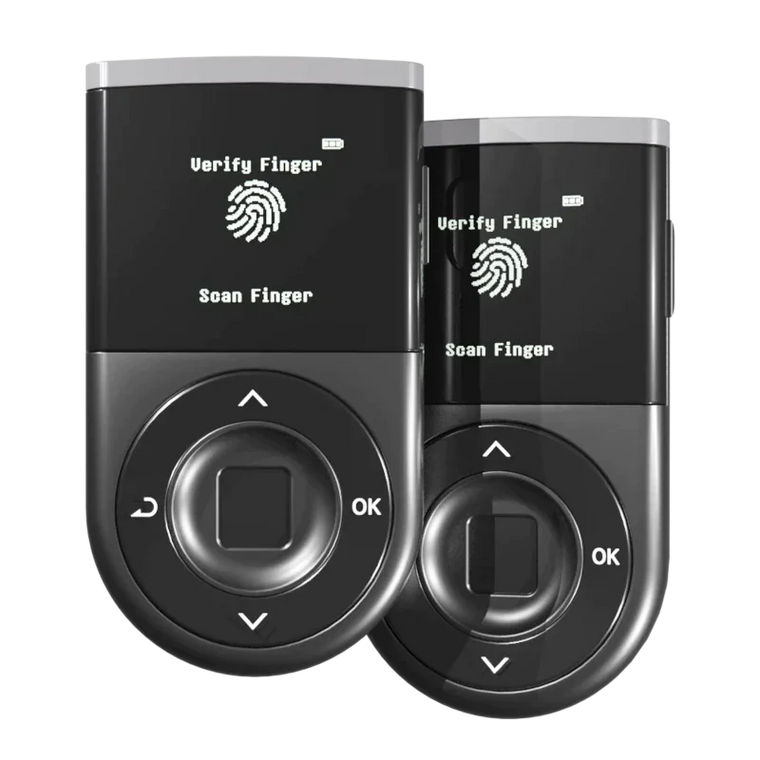
- Remote key extraction: Private keys are stored inside an EAL5+ certified secure element (ST33 chip — the same used in passport microchips and banking smartcards). No remote software can read or copy them. No remote key-extraction breaches have been reported since D'CENT's launch in 2018. Your seed phrase is a single point of failure — keeping it offline and protected is the foundation of self-custody security.
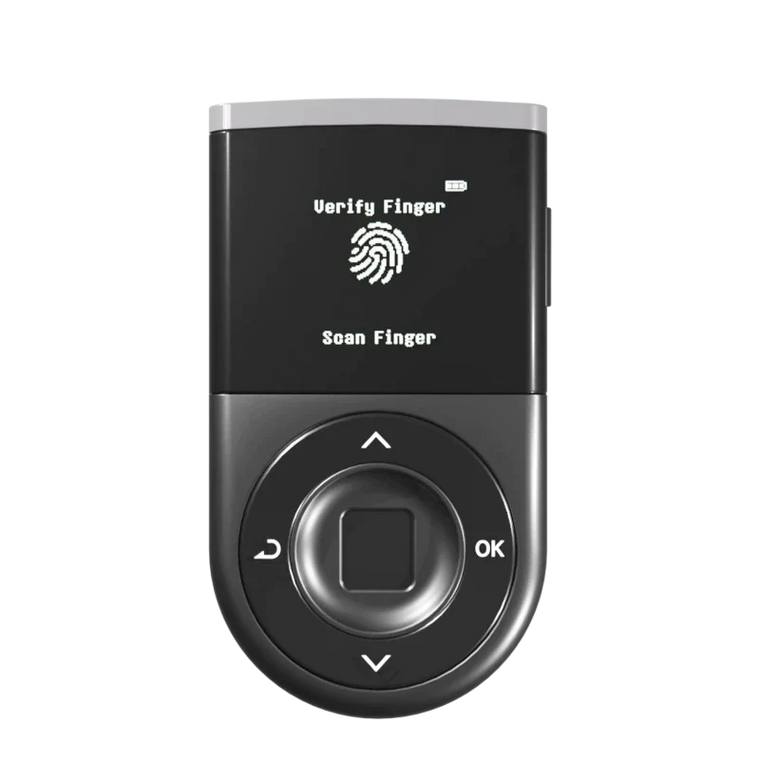
- Blind signing: D'CENT's WYSIWYS (What You See Is What You Sign) system displays the full transaction details — recipient address, amount, network — directly on the device screen before you approve. You verify the exact data being signed with your eyes before your fingerprint confirms it. Malware on your phone cannot intercept or alter what the device screen shows you.
- Malicious contract detection: D'CENT integrates Blockaid's real-time threat intelligence, which simulates transaction outcomes and flags malicious smart contracts, phishing addresses, and honeypot tokens on multiple supported chains before you sign.
What a hardware wallet does NOT protect you from:
Once you sign a deposit transaction into a DeFi protocol, those assets are under the protocol's control. The hardware wallet's job ends at the moment of signing. From that point forward, security depends entirely on the protocol's architecture: its oracle design, admin key management, governance structure, and incident response capability. This is not a flaw in hardware wallet design — it is the honest boundary of what self-custody tools can and cannot do.
Want to keep your private keys under your control?
EAL5+ secure element · WYSIWYS clear signing · Blockaid threat detection
Explore D'CENT Biometric Wallet →5 Lessons from the Drift Hack for Every Crypto Holder
The Drift exploit is not just a story about one protocol. It is a concrete illustration of risks that exist across decentralized finance. Here are five practical lessons every crypto holder can act on.
Action Checklist
Frequently Asked Questions
What is Drift Protocol and why was it attacked?
Drift Protocol is a Solana-based decentralized perpetuals exchange that allows users to trade leveraged positions without a centralized intermediary. It was targeted because it held more than $500 million in TVL at the time of the attack, and its governance architecture — oracle design, admin key structure, and absence of timelocks — contained exploitable weaknesses that a sophisticated attacker could chain together.
Is Drift Protocol safe to use now?
As of publication (April 2026), Drift Protocol has paused operations and is conducting an investigation. Whether and when the protocol resumes normal operation, what security improvements are implemented, and whether any user funds are recovered remains to be determined. We recommend following official communications from the Drift team directly before making any decisions about using the platform.
Can a hardware wallet prevent DeFi hacks like this one?
No — and it is important to be clear about this. A hardware wallet protects your private keys from remote theft. It cannot protect funds you have already deposited into a DeFi protocol. Once assets are inside a smart contract, they are governed by that protocol's security architecture. Hardware wallets help you safely interact with DeFi — verifying what you're signing — but they do not insulate deposited funds from protocol-level failures like oracle manipulation or compromised admin keys.
What is oracle manipulation and how did it enable this hack?
A price oracle is a mechanism that DeFi protocols use to determine the value of assets on-chain. Oracle manipulation involves artificially influencing the price data that an oracle reports — typically by wash trading a low-liquidity token to make it appear more valuable. In the Drift hack, the attacker inflated the apparent value of a nearly worthless token, which the oracle accepted as legitimate collateral, allowing the attacker to borrow far beyond what real asset values would permit.
What is a timelock, and why does it matter for DeFi security?
A timelock is a smart contract mechanism that enforces a mandatory delay between when a privileged action is requested and when it executes. For example, a 48-hour timelock on admin withdrawal functions means that even if an admin key is compromised, the attacker cannot immediately drain funds — the community has a window to detect the activity and respond. The lack of effective delay mechanisms on Drift's admin functions was a key factor that allowed dozens of withdrawals to execute within minutes without meaningful opportunity for intervention.
Should I stop using DeFi after the Drift hack?
The Drift hack is a reason to use DeFi more carefully — not necessarily to stop using it. Understand the distinction between funds you hold in self-custody (where you control the keys) and funds deposited into protocols (where the protocol controls the assets). Size your DeFi exposure based on risk you're genuinely comfortable with. Research protocols' governance structures, audit histories, and security track records before depositing significant amounts.
Who is behind the Drift Protocol hack?
According to Elliptic, blockchain analytics firm, the on-chain patterns of the Drift attack bear similarities to tactics previously associated with suspected DPRK (North Korea) state-sponsored hackers — a group linked to several of the largest crypto heists in recent years. Attribution in crypto is probabilistic, not definitive, and Elliptic's assessment is that North Korean involvement is "likely" — not confirmed.
How does D'CENT's Blockaid protection help with DeFi security?
D'CENT integrates Blockaid's threat intelligence engine, which runs a simulation of your transaction before you sign it. This simulation can detect known malicious smart contracts, phishing addresses, and suspicious token approvals before your assets are at risk. Blockaid covers multiple supported chains and updates its threat database continuously. It is a pre-signing layer of protection — helping you avoid depositing into a bad contract in the first place.
Bottom Line
The Drift Protocol hack is not primarily a story about technical failure. It is a story about governance assumptions — who controls what, what data is trusted, and what delays exist before irreversible actions execute. When those assumptions are wrong, $285 million can disappear within minutes.
The clearest lesson for individual crypto holders is one of custody boundaries. A hardware wallet protects the keys you hold. It does not protect funds deposited into a protocol whose admin key has been compromised. Self-custody is a meaningful risk reduction for the assets under your direct control — it is not a shield for protocol-level risk.
DeFi offers real utility. It also carries real risk. The Drift hack is a reminder that understanding the boundary between your security and a protocol's security is not optional — it is the baseline of responsible participation. If you're looking for where to start with self-custody, see our guide to the best cold wallets for beginners in 2026.
Keep your keys in self-custody with D'CENT Biometric Wallet
EAL5+ secure element · WYSIWYS clear signing · Blockaid threat detection · No remote key-extraction breaches since 2018
Sources & References
- CCN — Drift Protocol $285M hack initial reporting and timeline
- Bloomberg — Post-incident coverage and market impact analysis
- Unchained — Technical breakdown of oracle manipulation and timelock absence
- CoinDesk — Attack attribution analysis and on-chain evidence review
- Elliptic — DPRK attribution analysis and blockchain forensics
- Fortune — Post-incident coverage