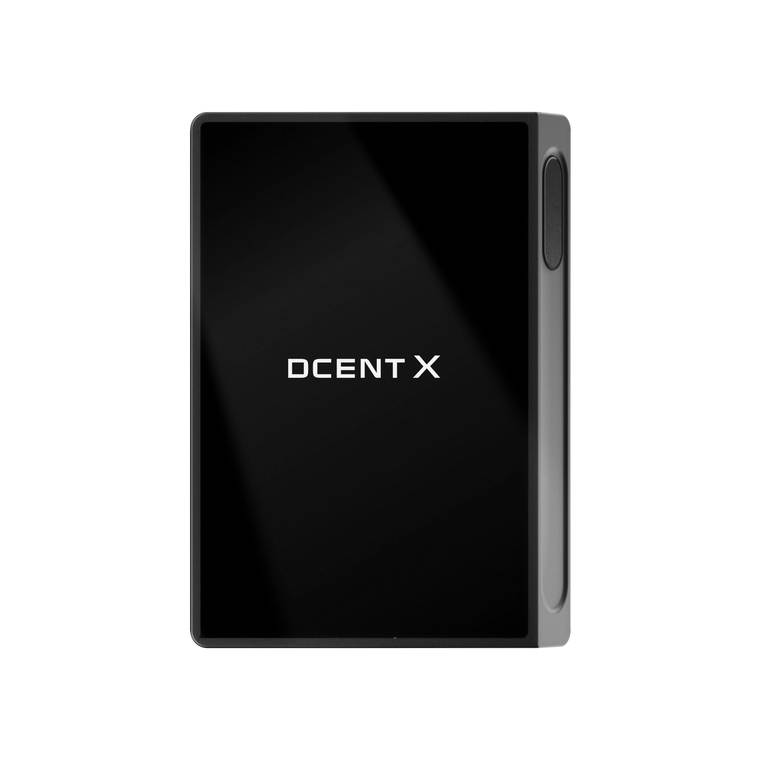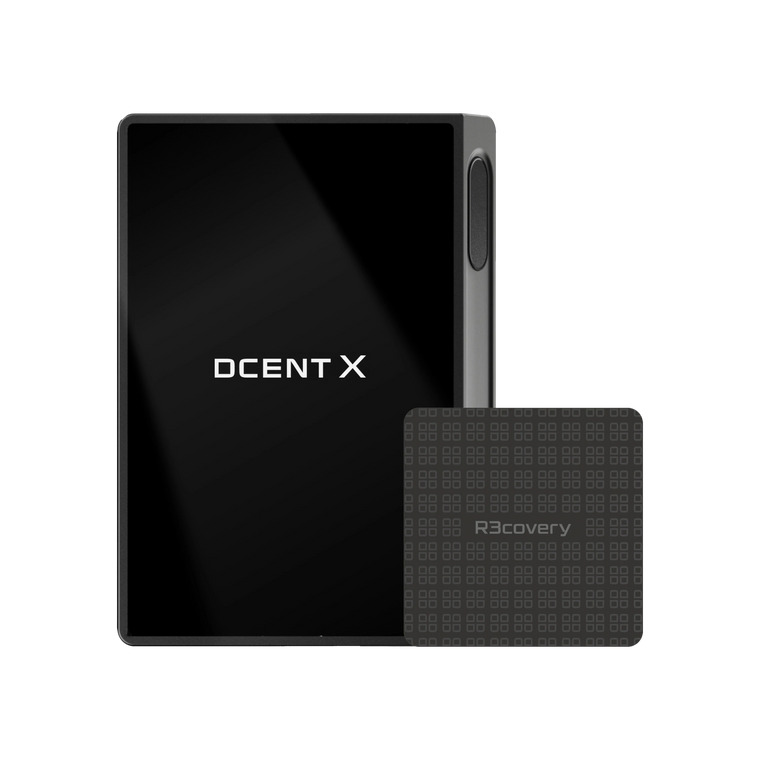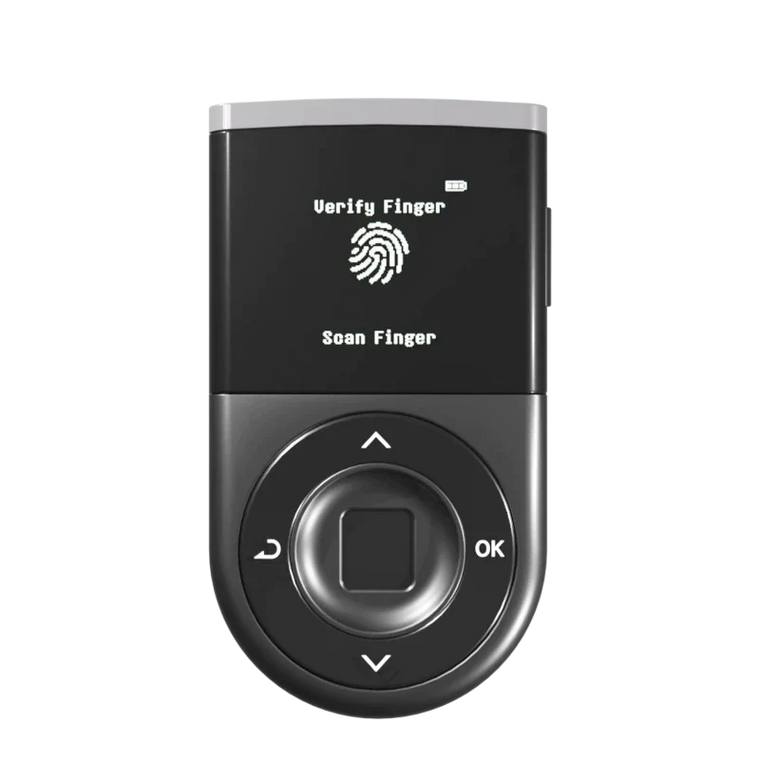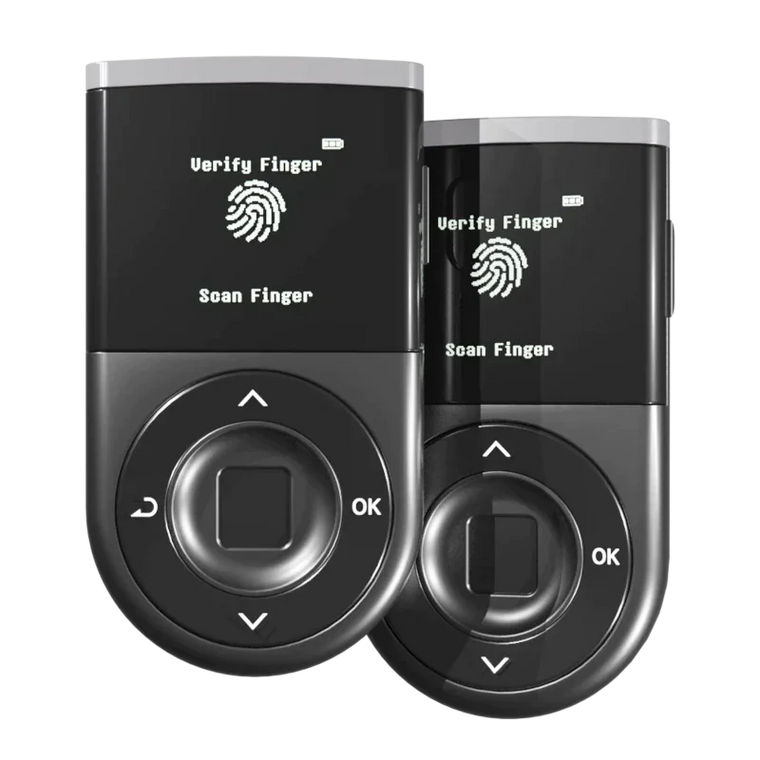







Self-custody has a reputation problem. Most people know they should hold their own keys — but setup, backup, and the fear of losing a 24-word phrase keep them on exchanges. Our latest D'CENT Wallet AMA was about closing that gap: a new card-sized wallet that rethinks recovery, an honest look at hardware security after the Coldcard incident, and where self-custody goes next for XRP holders.
We spent just over an hour on X Spaces with SMQKE, a digital asset researcher and long-time D'CENT user, and Mr. Man, an XRP community voice focused on regulation and long-term ownership, in conversation with D'CENT Chief Business Officer Wankyu Kim.
Missed the Space? Here's what you'll take away:
- How DCENT S rethinks backup and recovery to make self-custody easier — and less scary — to start.
- Why the Coldcard incident happened — and how D'CENT generates your keys so the same flaw can't happen the same way.
- What XRPFi means and where D'CENT is taking self-custody next.
Self-custody isn't just about holding anymore.
It's about using what you hold — safely.
DCENT S: Making Backup and Recovery Less Scary

Ask a first-time user what actually stops them from self-custody, and it's rarely "security." It's the 24 words.
D'CENT CBO Wankyu Kim: "The biggest fear beginners have is: what if I lose my 24-word phrase? What if I write it down incorrectly? That means I lose control of my assets."
That fear is exactly what DCENT S was designed to remove — without weakening security.
D'CENT CBO Wankyu Kim: "We launched DCENT S to make self-custody more approachable for first-time hardware wallet users. Many people understand the importance of security, but still find setup, backup, and the risk of losing access intimidating."
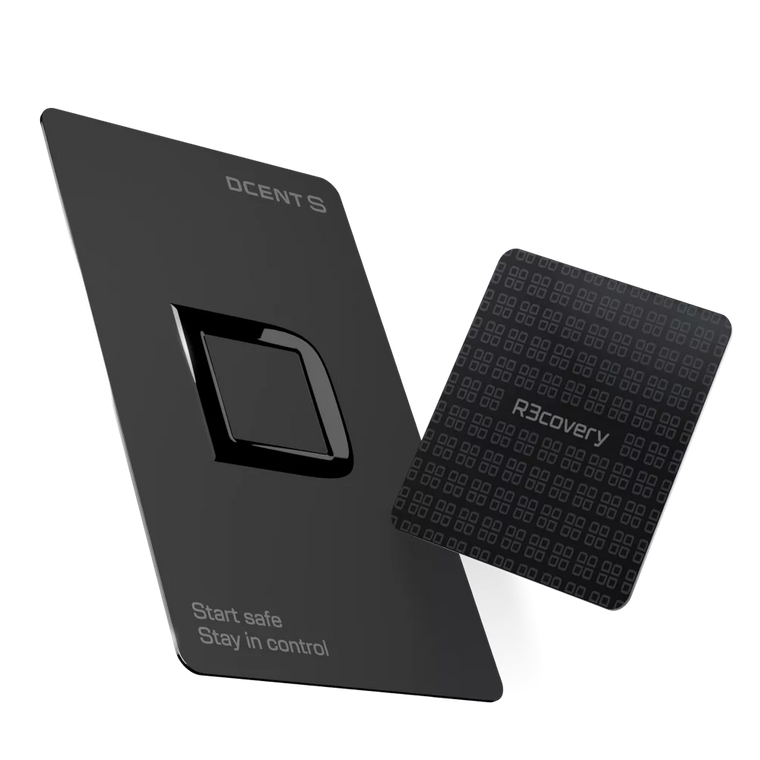
DCENT S is a card-format hardware wallet — a familiar form factor, NFC connectivity, no battery, and water resistance. For Mr. Man, who set it up himself, the friction was the whole story:
"The setup was one of the simplest setups… I was done within a matter of two minutes." — Mr. Man
Rethinking recovery: the R3covery Card

Here's the part that stood out. Traditional hardware wallets ask you to write down a recovery phrase and guard it forever. DCENT S pairs with the R3covery Card — a separate hardware backup — so you have another way to restore access without having to manually write out, store, and re-expose your recovery words every time.
| Card | Role |
|---|---|
| DCENT S | Your main card — asset management and transaction signing |
| R3covery Card | A separate hardware backup — restores access if the main card is lost or damaged (backup only, no signing) |
A few things worth knowing about the recovery philosophy behind it:
- It's redundancy, not a duplicate. If your main DCENT S is lost or damaged, the R3covery Card restores access — so losing one card doesn't mean losing everything. Because they back each other up, store the two cards separately in safe places.
- You can make more than one. A single DCENT S can create multiple R3covery Cards (and vice versa) — keep them in different locations, or with family, for safekeeping.
- Traditional backup still works. If you prefer the classic recovery-phrase method, it's still there. DCENT S doesn't take the option away — it adds an easier one.
The CBO framed the same idea for larger holders too: instead of splitting a seed phrase among several people (who could, in theory, combine it), the R3covery approach reduces how often the phrase is exposed at all.
Takeaway: DCENT S doesn't just make self-custody secure — it makes backup and recovery approachable, which is usually the real barrier to getting off an exchange.
The Coldcard Lesson — and How D'CENT Generates Your Keys

Security became timely for a reason: the recent Coldcard incident. It's worth understanding, because it explains what actually keeps your keys safe — and why you don't have to worry about the same flaw on D'CENT.
According to reporting on the incident, a years-old firmware build error caused affected devices to generate seeds using a weak software random number generator instead of a hardware source — collapsing effective key strength low enough to reconstruct keys offline, with reported losses running past $100 million in Bitcoin.
The lesson the CBO drew is the important part: how a key is generated matters as much as whether a device has a Secure Element. A Secure Element can't fix a key that was created with weak randomness before it was stored.
Why you don't have to worry about the same flaw on D'CENT
Here's how D'CENT creates your keys — and why a Coldcard-style weak-entropy bug can't happen the same way:
- Real hardware randomness. Your key comes from a hardware True Random Number Generator (TRNG) inside a certified EAL Secure Element — genuine physical randomness, not a software formula, and not predictable values like a device ID, date, or counter (which is precisely what made the affected wallets guessable).
- Full entropy. The result is a full 256-bit key under the BIP39 standard — so many possible values that it can't realistically be guessed or brute-forced.
- Generated offline, inside the chip. The key is created and kept inside the Secure Element and is designed never to leave it.
- Firmware isn't in the loop. General-purpose firmware doesn't perform key generation — so a firmware bug can't change how your key's randomness is created.
That architecture is also why the CBO could reframe the trust question when Mr. Man raised the long term — people protecting years, even generations, of wealth:
Q: How does D'CENT build and maintain trust over such a long period of time?
D'CENT: "D'CENT does not ask users to trust us with custody of their assets. As a non-custodial wallet, users control their own private keys and recovery words, while D'CENT provides the tools to manage them securely."
D'CENT has also completed independent third-party security reviews covering firmware, architecture, source code, and penetration testing (detailed findings stay private for security reasons).
But the most useful takeaway for any holder is this: a secure device is only one part of staying safe. Phishing, social engineering, exposed recovery phrases, and malicious approvals remain the bigger risk. The FBI's 2025 Internet Crime Report logged a record $11.3 billion in crypto-related fraud losses — much of it from people being tricked into exposing sensitive information, not from hardware flaws.
D'CENT: "No hardware wallet can protect funds if the seed phrase is disclosed or a malicious transaction is approved."
The rules that keep you safe: D'CENT will never ask for your recovery phrase; never enter recovery words on an internet-connected device; and always verify the recipient, amount, and network before you approve. Self-custody gives you control — and that control comes with responsibility.
Where This Is Heading: From Self-Custody to XRPFi

Security may be where self-custody begins, but the AMA closed on where it's going. The CBO was clear that D'CENT wants to be more than a place to park assets:
D'CENT: "Our goal is for D'CENT to become more than a secure place to store digital assets."
For XRP holders specifically, that points to XRPFi — the growing set of ways to actually use XRP (DeFi, real-world-asset applications, cross-chain, payments) rather than just holding it. It's the thinking behind the XRP Alliance, D'CENT's initiative to connect holders with these opportunities directly from self-custody, and the recent Soil collaboration — a compliance-focused, real-world-asset protocol you can discover through D'CENT's in-app dApp browser — is the first example.
SMQKE: "A lot of XRP holders have that golden question of what to do… with the capital and the price appreciation of your held tokens over time." (SMQKE's personal view)
D'CENT vets every partner it surfaces — across security, technical reliability, transparency, regulatory approach, and governance — and keeps monitoring after launch. But it drew a clear line:
D'CENT: "D'CENT provides access and information, but does not guarantee the performance or safety of any third-party protocol."
DeFi and XRPFi involve real risk. D'CENT's role is to make useful opportunities easier to discover and access — always review the terms and disclosures first. And this direction isn't limited to XRP: D'CENT said it's already exploring similar approaches on other networks.
What This Means for You
If you skimmed to here, this is the part to keep:
- DCENT S makes recovery less scary. A card-format wallet plus the R3covery Card gives you an easier way to back up and restore — without relying only on a hand-written 24-word phrase.
- Your keys are generated safely by design. D'CENT creates keys with a hardware TRNG inside a certified Secure Element, offline, with full entropy — so a Coldcard-style firmware entropy flaw can't happen the same way.
- A secure device is only half of it. Most losses come from phishing and exposed recovery phrases — never share yours, and verify every transaction before you approve.
- Self-custody is opening up (XRPFi). There are more ways to use your XRP while keeping your keys — but DeFi carries risk, and D'CENT gives access, not guarantees.
What the Community Asked
The AMA closed with live questions from XRP holders — and they landed on exactly the concerns this whole conversation was about: keeping the 24 words safe, backing them up, and whether self-custody is worth the effort. Three community members who asked standout questions were picked to receive a DCENT S + R3covery kit.
One exchange tied it all together. A listener — a 60-year-old who'd been in crypto for about two years, with assets still sitting on an exchange — said plainly that managing a 24-word seed phrase made him nervous. The answer summed up the whole AMA:
D'CENT: "That's exactly why we launched DCENT S and R3covery — you don't need to write down the 24 words to back up. You keep the R3covery Card somewhere safe, and make sure no one else can access it."
It's the clearest example of who these products are built for. The rest of the highlights:
Does DCENT S support a 25th-word passphrase?
D'CENT: Not currently. The optional passphrase feature is available on the D'CENT Biometric Wallet, while DCENT S and R3covery are intentionally focused on a simpler onboarding and recovery experience for first-time users.
Can I create multiple R3covery Cards?
D'CENT: Yes. You're not limited to a single R3covery Card — you can create multiple cards from one DCENT S (and vice versa) and store them in different safe locations. D'CENT also plans to offer DCENT S and R3covery separately, giving more flexibility when building a backup setup.
Is it better to keep XRP on an exchange, or move to self-custody?
D'CENT: Centralized exchanges and self-custody wallets serve different purposes, but the fundamental difference is who controls the private keys. With a centralized custodian, you depend on a third party to safeguard and provide access to your assets. With self-custody, you control the keys yourself. As Mr. Man put it: "Not your keys, not your crypto." But greater control also means greater responsibility — you still need to protect your recovery information, verify transactions, and follow good security practices.
The Bottom Line
The AMA kept returning to one idea: the next stage of self-custody isn't just about keeping crypto safe. It's about making ownership easier to start, safer to maintain, and more useful over time — from a wallet that takes the fear out of recovery, to keys that are secure by design, to new ways to put your assets to work without giving up control.
Your assets. Your keys. Your choice.
D'CENT Wallet
Self-custody, made easier to start.
DCENT S + R3covery Card · Certified Secure Element (EAL6+) · Hardware TRNG · NFC tap-to-sign · Non-custodial
Get DCENT S →Watch the full conversation on the D'CENT Wallet X Space, and follow @DCENTWALLETS for the giveaway winner announcement and future updates.
Nothing in this recap is financial advice. DeFi and third-party protocols carry risk — always review the relevant terms and disclosures, and do your own research before participating.