






When a hardware wallet loses funds, the headline is usually "cold storage failed." But the real lesson of the recent Coldcard seed-generation issue is quieter and more important: a private key is only as safe as the randomness that created it. If that randomness is weak, the key can be guessed — no matter how offline the device is.
A private key should be private
before it even exists.
The short version: DCENT is not affected by the recent Coldcard seed-generation issue — your private key is generated offline by a hardware true random number generator (TRNG) inside a certified Secure Element. As with any hardware wallet, your assets can still be at risk if your recovery phrase (seed words) is exposed, so keeping it offline is still up to you.
TL;DR
- The core of the Coldcard issue was the quality of the randomness (entropy) used to create the seed — not that a wallet generates one.
- DCENT generates private keys with a hardware TRNG inside an EAL5+/EAL6+ certified Secure Element — not with software.
- Keys are generated offline inside the chip and never leave it.
- The Biometric Wallet follows the standard BIP39 process (256-bit) with no extra entropy mixing.
- If your recovery phrase is stored safely offline, you don't need a new wallet because of this issue alone.
Why the Coldcard Issue Matters
According to manufacturer Coinkite's official security advisory, the issue involved insufficient randomness (entropy) used to generate the seed on certain products and firmware. CoinDesk reported that funds were swept quickly from a number of affected wallets.
The point is not that a hardware wallet auto-generates the seed. The real issue is how unpredictable and how safely that randomness is created. Weak or predictable randomness means a key can be guessed, no matter how offline the device is. In other words, a private key should be secure from the very moment it is created.
How DCENT Generates and Protects Your Keys
Every DCENT hardware wallet is built around a Secure Element — a dedicated security chip certified under Common Criteria. Your private key is created, stored, and used entirely inside this chip. It is never exposed to your phone, the DCENT app, or the internet.
| Product | Secure Element & certification |
|---|---|
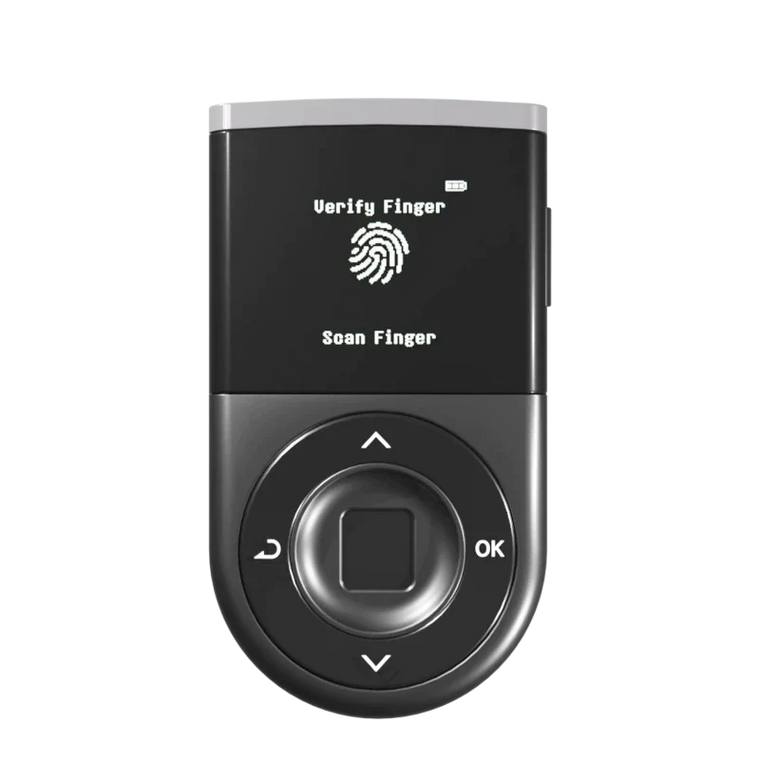
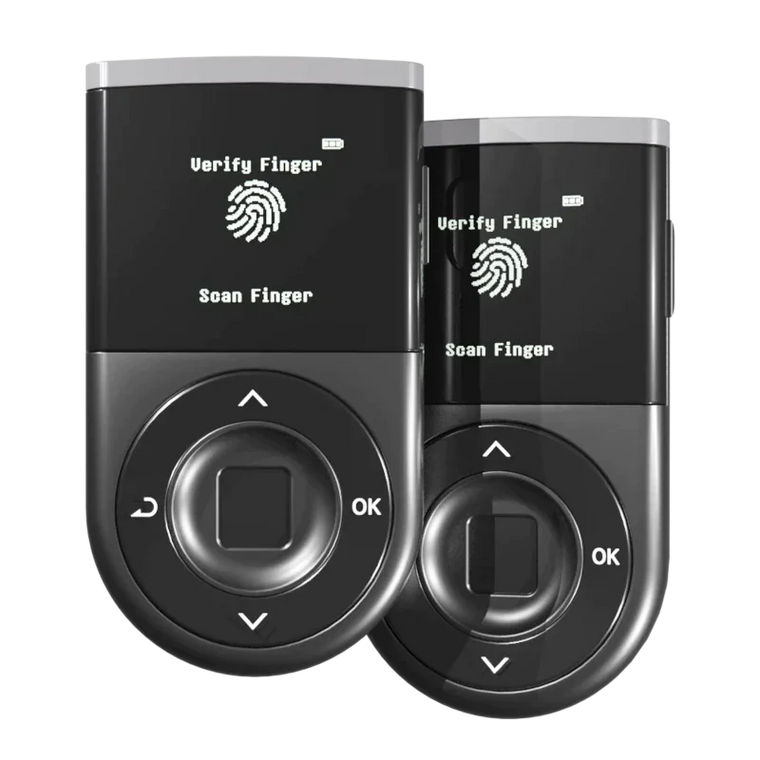
| Biometric Wallet | Certified Secure Element — Common Criteria EAL5+ |
| DCENT S | Certified Secure Element — Common Criteria EAL6+ |
Made with hardware randomness (TRNG)
The randomness behind your key comes from the chip's built-in hardware TRNG — real physical randomness generated at the chip level. It is not a software formula, not from your phone or any server, and does not rely on predictable values such as a serial number, timestamp, or user input. The result is a 256-bit key: so many possible values that it cannot realistically be guessed or brute-forced.
Why a firmware bug can't affect this: random number generation and key handling run inside the Secure Element chip — not in the device firmware, so a firmware bug does not change how your key's randomness is generated. On the Biometric Wallet, firmware only handles non-security functions such as network and asset support; DCENT S has no firmware update path at all. (This is the key difference from a firmware-level entropy flaw.)
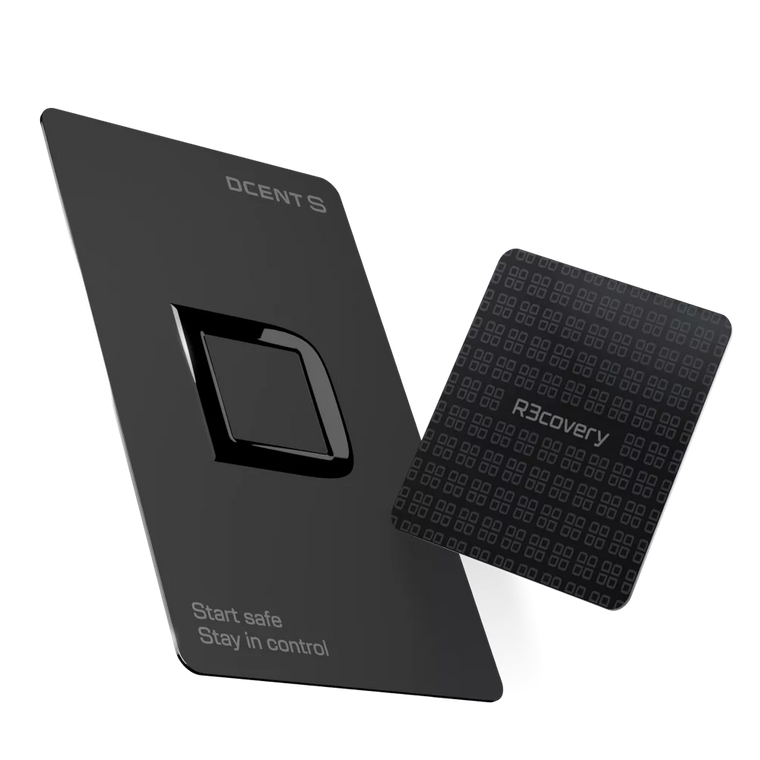
On the Biometric Wallet, the recovery phrase follows the standard BIP39 process — the TRNG produces 256 bits, a checksum is added, and the result is mapped to 24 words, with no extra entropy mixing. DCENT S uses a card-based hardware backup and has no seed phrase.
Signed inside the chip, verified on the device screen
Transactions are signed inside the Secure Element, and only the signed result leaves the chip. Before you approve, DCENT shows the recipient, amount, and network on the device's own screen, so you can verify exactly what you are approving.
A note on security: with any hardware wallet, losses can still occur if you sign a malicious transaction or expose your recovery phrase. Hardware greatly reduces the risk of key theft, but the final check is always up to you.
Non-custodial, and independently audited
The DCENT app is only an interface for viewing balances and managing assets. DCENT is a non-custodial wallet: we do not store or manage your recovery phrase or private keys on any server. DCENT's Biometric Wallet has also undergone an independent third-party security evaluation, covering firmware, Secure Element applets, key management, transaction signing, and attack resistance; identified findings were remediated and re-verified.
| Stage | How DCENT handles it |
|---|---|
| Key generation | Hardware TRNG inside a certified Secure Element, fully offline |
| Randomness | Physical, not software; no predictable values |
| Storage | Key never leaves the chip |
| Signing | Inside the Secure Element; verify on the device screen |
| Custody | Non-custodial — never stored on our servers |
| Audit | Independent third-party evaluation |
What Should You Check Right Now?
If your recovery phrase is stored safely offline and there is no sign it has been exposed, you do not need to buy a new wallet or reset your device because of this issue alone.
- Confirm your recovery phrase is stored safely offline (for example, on paper).
- Check that you have never entered or stored it on a website, app, messenger, email, or cloud service.
- Keep your device firmware and the DCENT app on their latest versions.
- If your recovery phrase may have been exposed, create a new wallet with a new recovery phrase in a safe environment, move all assets to it, confirm the transfer, and stop using the old wallet.
Mistakes to Avoid
- Exposing your recovery phrase — never photograph it or save it to the cloud or a notes app; once it's online, it's no longer safe.
- Entering it into a website or external app — legitimate wallets never ask for your recovery phrase.
- Restoring from an unverified source — only use official apps and links.
- Ignoring a risky origin — don't keep using a recovery phrase created on an affected device (especially an affected Coldcard model) without assessing the risk.
Practical Security Checklist
- ☐ My recovery phrase is stored safely offline (for example, on paper)
- ☐ I have never entered or stored it on a website, app, messenger, email, or cloud
- ☐ I have never shown it to anyone
- ☐ My DCENT device firmware is up to date
- ☐ My DCENT app is up to date
- ☐ I verify the recipient, amount, and network on the device screen before signing
- ☐ I regularly review and revoke unnecessary token approvals
- ☐ If exposure was possible, I have completed a migration to a new wallet
The Bottom Line
The Coldcard issue is a reminder that what matters is not whether a hardware wallet exists, but the quality of the randomness that creates your key. DCENT generates private keys offline with a certified Secure Element's hardware TRNG, does not rely on predictable values, and has been independently audited. Even so, keeping your recovery phrase safe is still up to you.
Where your key comes from matters
as much as where you keep it.
DCENT Wallet
Security that starts before your first transaction.
Certified Secure Element (EAL5+/EAL6+) · Hardware TRNG · Biometric Authentication · Non-custodial · 1M+ users worldwide
Explore DCENT Wallet →FAQ
Can the same firmware-level entropy flaw that hit Coldcard happen on DCENT?
No. On DCENT, the randomness used to create your key comes from the Secure Element's hardware TRNG, generated offline inside the chip — not from software or any external source.
How does DCENT ensure my key is truly random?
The key is created with the Secure Element's built-in hardware TRNG — real physical randomness. Because the result is a full 256-bit key, the number of possible values is astronomically large, so it cannot realistically be guessed or brute-forced.
Which Secure Element does DCENT use, and is it certified?
The Biometric Wallet uses a certified Secure Element (Common Criteria EAL5+). DCENT S uses an EAL6+ certified Secure Element. Both are independently evaluated under the internationally recognized Common Criteria standard.
The seed is created by a random number generator that runs on code, and code can have bugs. How is DCENT protected against a firmware bug affecting this?
On DCENT, security-critical functions such as random number generation and key handling run inside the EAL5+/EAL6+ Secure Element chip — not in the device firmware. The firmware only handles non-security functions such as network and asset support. So even if a firmware bug occurs, it does not affect how your key's randomness is generated. In addition, DCENT S has no firmware update path, and DCENT's firmware was included in the scope of an independent third-party security evaluation.
Do I need to keep my firmware updated?
We recommend keeping your firmware and the DCENT app on their latest versions for improvements and new network/asset support. That said, the security of your key does not depend on firmware — random number generation and key handling take place inside the Secure Element chip.
I'm using a recovery phrase created on another wallet. Is it safe?
A recovery phrase's security depends on the device where it was originally generated. If it was created on DCENT, it was produced by the hardware TRNG and is safe. If it was created on a device affected by a security issue — especially an affected Coldcard model — that risk stays with the phrase itself wherever you use it now. In that case, create a new wallet on a secure device and move your funds.
Do I need to reset my wallet or move funds because of this?
If your recovery phrase was generated on DCENT and kept safely offline, no action is needed. If it may have been exposed, create a new wallet with a new recovery phrase in a safe environment, move your assets, confirm the transfer, and stop using the old wallet.
Is this a problem with all hardware wallets?
No. This is an issue confirmed on certain products and firmware from one manufacturer, and it should not be assumed to apply to all hardware wallets.