






📚 XRPFi Beginner Series · Part 3 — Understanding XRP & Trust Lines → Part 4 — The Best XRP Wallet 2026 (you're here)
In Part 3 we saw that storing XRP is easy — almost any wallet does it. What actually decides whether you can use your XRP in XRPFi is one thing: XRPL depth (can the wallet open Trust Lines in-app and deposit natively, or does it punt you to another app?). So the natural next question is — which wallets actually have that depth? This post is the full rundown: 4 hot and 4 cold wallets, compared head to head.
Holding 1,500 XRP on an exchange? Here's the full breakdown — 4 hot and 4 cold wallets compared, why (and when) to move to cold storage, and what real users actually say.
Make your cold-stored XRP work harder →
1. The Short Answer — The Right Wallet for Your Holdings
| Your holdings | Recommended wallet |
| Under 500 XRP, frequent trading | Hot wallet (Xaman or D'CENT app wallet — free) |
| 1,000–3,000 XRP, DeFi / airdrop hunter | Cold main + hot backup (D'CENT Biometric + Xaman or D'CENT app) |
| 5,000 XRP+, multi-chain heavy trader | Full cold stack (D'CENT Biometric + Chrome extension) |

But first — you might be thinking, "why not just leave it on the exchange?" Exchanges are great for buying and selling, but the exchange holds your keys. If it gets hacked, freezes withdrawals, or goes bankrupt, your XRP can be locked up with it. That's why, once you cross a certain amount, moving your XRP into your own wallet — hot or cold — is the starting point of self-custody. The next decision is simply "hot or cold?"
We'll walk through the wallet comparisons and real user reviews one step at a time.
2. XRP Hot Wallets Compared — Free Wallets Built for Daily Use
When you first create a wallet, a single private key is generated. This key is the one and only secret that can move your wallet and its assets — whoever holds it effectively owns the funds. So where that key is stored is the heart of wallet security.
A hot wallet stores that private key on your phone or computer. It's instantly usable on mobile and mostly free. Here are four leading hot wallets that support XRP.

| Hot wallet | XRPL depth | Transaction fee | Coins & tokens |
| Xaman | ★★★★★ | 0.8% (min. 0.09 XRP) | XRPL · Xahau only |
| Trust Wallet | ★★★ | Swap fees | 100+ coins & tokens |
| Exodus | ★★★ | Swap spread | 50+ coins & tokens |
| D'CENT app wallet | ★★★★ | $0 | 100+ coins & tokens |
Xaman is an app wallet built specifically for the XRPL network. It's packed with handy XRP features — for example, you can create a Payment Request link that asks a sender to transfer a set amount to your XRP address. It automatically handles Trust Lines for XRPL tokens (SOLO, RLUSD, etc.), and it has a built-in mini exchange (xApp DEX).
- Supported chains — XRP · Xahau (2)
- Key storage — On your phone (hot wallet)
- Transaction fee — 0.8% (min. 0.09 XRP)
- High-value transfer fee — Free under $50K · 0.1% for $50K–100K · 0.07% over $100K
The catch: it doesn't handle other coins like BTC or ETH. It's a dedicated XRP specialist.
Handles 100+ chains from a single wallet.
- Started supporting XRPL tokens (ARMY, RLUSD) in 2026
- Shallower XRPL depth than Xaman, but a good fit if you want BTC, ETH, SOL and XRP in one place
- Announced an official Ripple partnership in April 2026, with native XRP and RLUSD support
- Praised for its clean interface
- Handles multi-chain plus XRP
Install the D'CENT app and you start in free hot-wallet mode (the "app wallet"). The biggest difference from other hot wallets is that, as your holdings grow, you can upgrade to hardware without switching wallets — the same wallet simply graduates.
- XRPL Trust Lines, built in — receive XRPL tokens like SOLO and RLUSD directly inside D'CENT (no external app), and remove a Trust Line just as easily
- A personal XRP address that needs no Tag — your D'CENT XRP address doesn't require a Destination Tag, protecting you from the #1 cause of lost XRP (a missing Tag on receipt)
- Separate XRP accounts — split your XRP into multiple accounts from the same seed, by purpose
- 100+ networks — XRP plus XLM, XDC, BTC, ETH in one wallet
If you trade often, hold small amounts, or only use XRPL, a hot wallet is plenty. But once your holdings grow or you start juggling multiple chains, the story changes. We'll cover those limits next.
3. The Limits of XRP Hot Wallets — 3 Things You'll Notice as Holdings Grow
Hot wallets are great for getting started, but their limits show as your holdings grow — and these are exactly why Ripple holders move to cold storage.

1. Key Exposure Risk — Your Key Lives on Your Phone
A hot wallet's key sits on your phone or computer. If the device is compromised by hacking, malware, or phishing, your assets are exposed with it — and the larger your holdings, the larger the potential loss.
A cold wallet is the opposite. The 24-word seed is generated inside the hardware, stays inside it, and never leaves for the app or the internet. Transactions are confirmed on the device screen and signed there, so even if your phone or PC is compromised, the key itself stays safe.
2. Single-Chain Lock-In
Xaman only supports XRPL and Xahau. If you also hold BTC, ETH, SOL, XDC or XLM, you end up managing several separate wallets.
3. No Cold Signing — Risky for Large Transfers
Cold signing means approving a transaction on a separate, offline device. Because a hot wallet's key inherently lives on your mobile device, there's no safer flow for large or critical transactions.

These are the three reasons frequent traders and growing holders naturally start looking at cold wallets.
4. XRP Cold Wallets Compared — 4 Products
Here are four leading cold wallets that support XRP, compared on their strengths, limits, and XRPL depth.
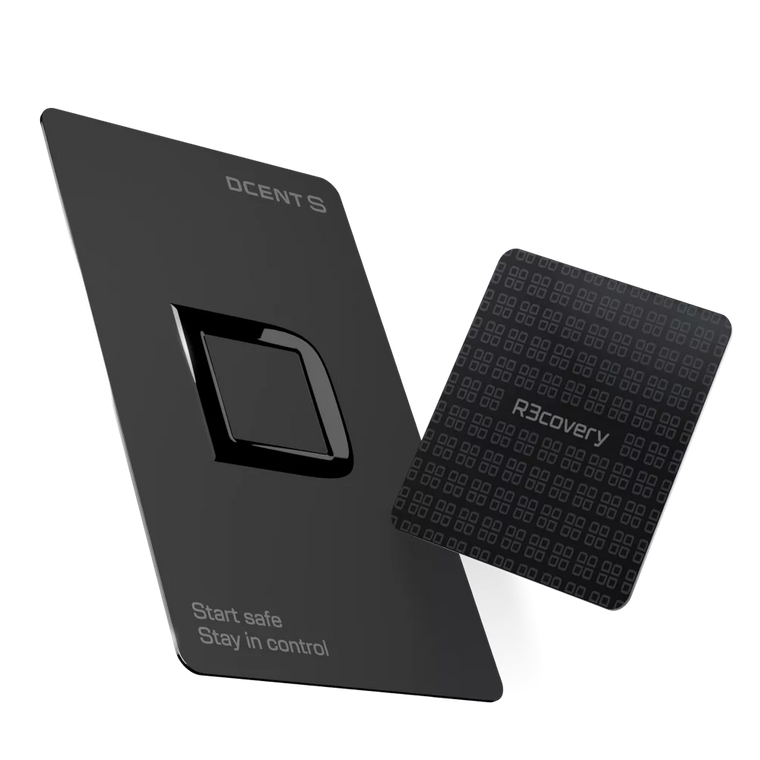
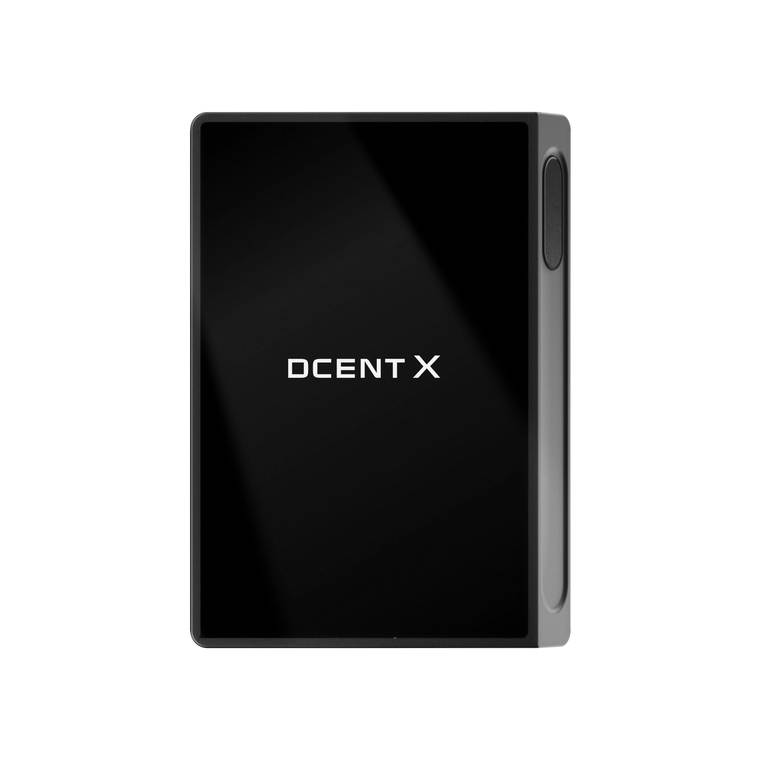
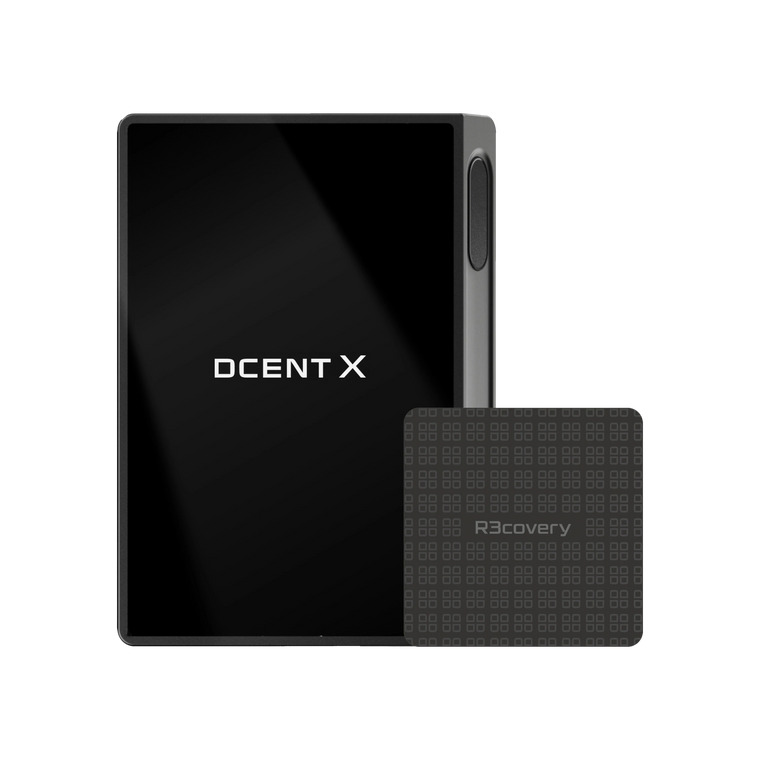
A cold wallet usually works as two linked parts: the device (hardware) is the vault that stores your private key and signs transactions inside itself, and the app is the window that shows your balance, history and dashboard and connects to other services like exchanges and DApps. The key point is that signing always happens inside the device, and the key never leaves it for the app or the internet. (The comparison below shows the device and app together.)

| Cold wallet | Auth | XRPL Trust Line | XRP yield (Flare) | XRPL depth |
| Ledger Flex | PIN | 🟡 Via external app | ❌ | ★★★ |
| Trezor Safe 7 | PIN | 🟡 Limited | ❌ | ★★ |
| Tangem (3-card) | Card NFC | 🟡 Limited | ❌ | ★★ |
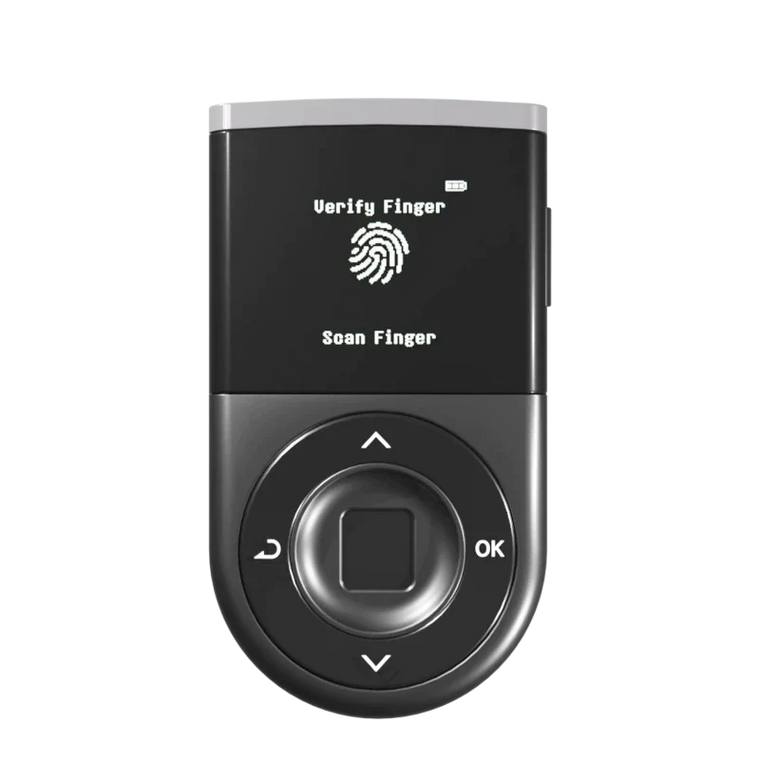
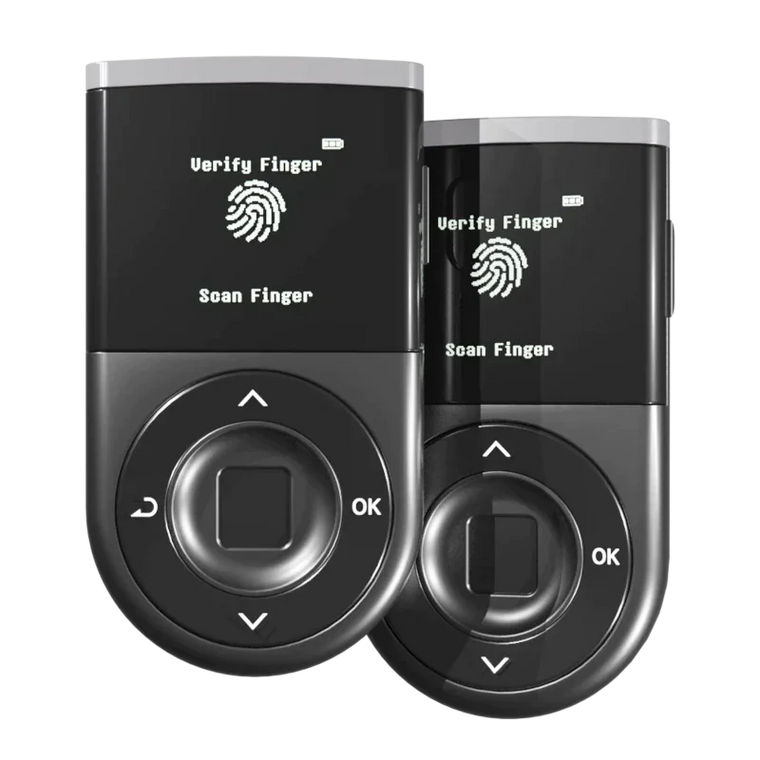
| D'CENT Biometric | Fingerprint | ✅ One tap | ✅ On-device | ★★★★★ |
Look at the last two columns — XRPL depth and on-device XRP yield. That's the exact thing Part 3 said would decide whether you can actually use your XRP, not just store it. Among these four, only one checks both boxes — so let's go through them.
- 2.84" E Ink touchscreen — review transaction details on a large screen
- 5,500+ coins — almost every major coin, including XRP
- Bluetooth + USB-C + NFC — multiple connection options
- XRPL goes through an external app — limited Trust Line / DApp depth, so you need a companion app like Xaman. There's also been controversy around the Ledger Recover policy
- Color touch display — visualizes transactions
- EAL6+ chip — military-grade security
- Open source — code transparency, community-audited
- XRPL integration — relatively shallow XRP/XRPL depth, little localization, and the Trust Line UX leaves something to be desired
- Card NFC — tap to your smartphone to use
- EAL6+ chip — strong security
- 6,000+ coins supported
- Card setup & display — it can't be factory-reset, so it ships as a 2–3 card set linked to the same wallet. With no display of its own, it relies on the smartphone screen
The product that integrates differentiated features for XRP/XRPL users most deeply. On top of the D'CENT app wallet features above (XRPL Trust Lines, a Tag-free personal address, etc.), the hardware adds:
- Fingerprint auth — no PINs or passwords to memorize; sign instantly with your fingerprint
- 100+ networks · 5,000+ coins & tokens — XRP, XLM, XDC, BTC, ETH on one device
- XRP-only campaigns — run XRP-holder campaigns like Flare XRPFi Yield right inside the app
- D'CENT Wallet for Chrome — connect on desktop and sign with the hardware fingerprint too
💚 Wake up your sleeping XRP — XRP moved to a D'CENT Biometric can be put to work through Flare XRPFi and more.
5. What Real Users Say About D'CENT
884 verified global reviews, averaging 4.75 / 5 (87% five-star). Five user experiences that come up often in XRP-related reviews.
D'CENT is a cold storage solution for XRP and other crypto, and it exceeded expectations. Easy setup, clean interface, and strong support for portfolio tokens (XRP, XDC, FLR, SGB).
— Stewartsville NJ, US · 5★ (2025-07)
Ledger told me they'd stop supporting my old wallet, so I bought a D'CENT Biometric. Far cheaper than the equivalent Ledger, and it supports both major and minor coins.
— Spruce Grove, Canada · 5★ (2025-08)
D'CENT is the sixth cold wallet I've bought, and it's number one. Velo and XRP support sold me. Best coin coverage, ease of use, and a reasonable price. I don't use Trezor anymore.
— London, UK · 5★ (2025-01)
I'm an ISO 20022 purist and I also hold Flare — D'CENT supports both, so I'm set for the future.
— Seattle WA, US · 5★ (2025-10)
Great for someone using a cold wallet for the first time. Easy interface, and the coins I use (XRP, XDC, XLM, HBAR) are all supported natively — no third-party apps needed.
— Los Angeles CA, US · 5★ (2024-12)

❓ Frequently Asked Questions
Q1. How much XRP before I should move to cold storage?
There's no fixed rule, but the common community benchmark is around $1,000 worth (currently ~1,000–1,500 XRP) — once you cross it, it's time to consider cold storage. If you rarely trade and mostly hold long term, you can move even earlier. The real question isn't the amount — it's "can you sleep with this much sitting on an exchange or phone?"
Q2. How do I move XRP from an exchange to D'CENT?
Follow a step-by-step guide with screenshots for your exchange.
Q3. What is a Destination Tag, and when do I enter it?
Exchange deposit addresses are shared by many users, so a numeric Tag is needed to identify whose deposit it is. Exchange → D'CENT: no Tag (it's a personal wallet, so it's not required); D'CENT → exchange: always enter the Tag the exchange requires. Skipping it can result in lost funds. D'CENT's send screen prevents these mistakes with a dedicated field and a "Tag required when sending to an exchange" notice.
Q4. What is the 1 XRP reserve?
The XRPL keeps a minimum balance locked to activate and maintain each account — currently 1 XRP, plus 0.2 XRP per Trust Line. So you can't send your entire balance at once. We break down exactly how this works (and why your "depositable" amount is less than your balance) in Part 3 of this series.
Q5. D'CENT Biometric vs Ledger for XRP storage?
On XRPL depth, D'CENT activates Trust Lines in one tap on the hardware, and XRP Alliance campaigns like Flare XRPFi Yield run directly on the device. Ledger handles Trust Lines and XRPL tokens through an external app like Xaman. D'CENT also offers fuller localization and native fiat checkout in supported regions.
Q6. When I upgrade from the D'CENT app wallet to the Biometric, what happens to my assets?
Enter the same 24-word seed into the D'CENT Biometric and your assets appear as-is — no re-sending or new wallet setup. The asset-migration steps other hot wallets require are skipped entirely within the D'CENT ecosystem.
Q7. Do XRPL DApps (like Sologenic) connect directly to D'CENT?
The XRPL DApp currently integrated directly into D'CENT is Flare XRPFi Yield (XRP Alliance Round 1). WalletConnect XRPL support is in progress, and once added, other XRPL DApps will connect to D'CENT too. Until then, some XRPL DApps require recovering your seed into an external app (like Xaman).
Q8. Why not just leave it on the exchange?
Exchanges are convenient for trading, but because the exchange holds your keys, a hack, withdrawal freeze, or bankruptcy can lock up your XRP with it. That's where "not your keys, not your coins" comes from. For amounts you don't trade often, it's safer to move them to a wallet where you hold the keys — hot or cold. The larger your holdings, the better cold storage fits.
📬 Coming up next
You understand XRP, you've picked your wallet — now comes the part the whole series has been building toward: actually putting your self-custody XRP to work in XRPFi. In Part 5, we'll walk through depositing into the main XRPFi products (Flare's Monarq vault, Doppler, Soil) step by step, signed right on your D'CENT device. That's where XRPFi finally gets real.
👉 Up next → Part 5: How to deposit XRP into XRPFi vaults with D'CENT — your first real yield position, hardware-signed.
📚 Related Reading
- Best Cold Wallet for Beginners 2026
- How to Secure XRP, HBAR and XDC
- Why Keeping Crypto on an Exchange Is Risky
Buy the D'CENT Biometric Wallet →
A hardware wallet trusted since 2018 — hold your own XRP keys.