





![[Crypto Class 2] Your Seed Phrase: Really Stored Safely?](http://store.dcentwallet.com/cdn/shop/articles/2_EN_90a9a155-30bf-4d1a-8d45-cc4ed173dc65.jpg?v=1784594134&width=1100)

Last time, we talked about how the biggest risk in self-custody isn't hacking — it's loss. Today we're focusing on what sits right at the center of that risk: your 24-word recovery phrase (seed). Where and how you store it changes everything about your safety.
The Wallets Were Fine. The Assets Vanished Anyway.
In 2022, the password manager LastPass was hacked. The problem: many people had stored their crypto seed phrases and private keys inside it.
The attackers weren't in a hurry. They quietly cracked the stolen vaults over years. Some wallets sat untouched for a long time, then emptied overnight, and the thefts continued into 2025. The estimated damage exceeds $400 million. Even a Ripple co-founder's wallet lost about $150 million worth of XRP this way, because their keys had been stored in LastPass.
But here's the thing: these wallets weren't actually hacked. The wallets were fine. The problem was that the seed had been stored digitally.
The Problem Isn't the Seed — It's How You Store It
A recovery phrase is usually 24 words: the master key to your wallet. With those 24 words, you can restore your assets on any device. That power is exactly why it demands care, because whoever gets hold of those words can take your assets with them.

It's easy to misunderstand, but the recovery phrase itself isn't the villain. Stored well, offline, it's a dependable backup that can restore your assets anywhere. The problem isn't the seed — it's where and how you keep it. Even the LastPass case happened not because the seed was weak, but because it was stored digitally.
That's where these storage traps come in.
Write it on paper
There's risk of loss, fire, or damage. (We covered this last time.)
Store it digitally
Convenient, but the moment it leaks, it's over. Exactly what LastPass showed us.
That "convenient" moment you dropped it into a photo or a password app is exactly when it became your biggest vulnerability.
There Are Two Roads to Protecting Your Seed
There are broadly two ways to keep a recovery phrase safe. One is to store the seed properly, offline — managing your seed yourself. The other is to remove the step of writing it down on paper altogether.
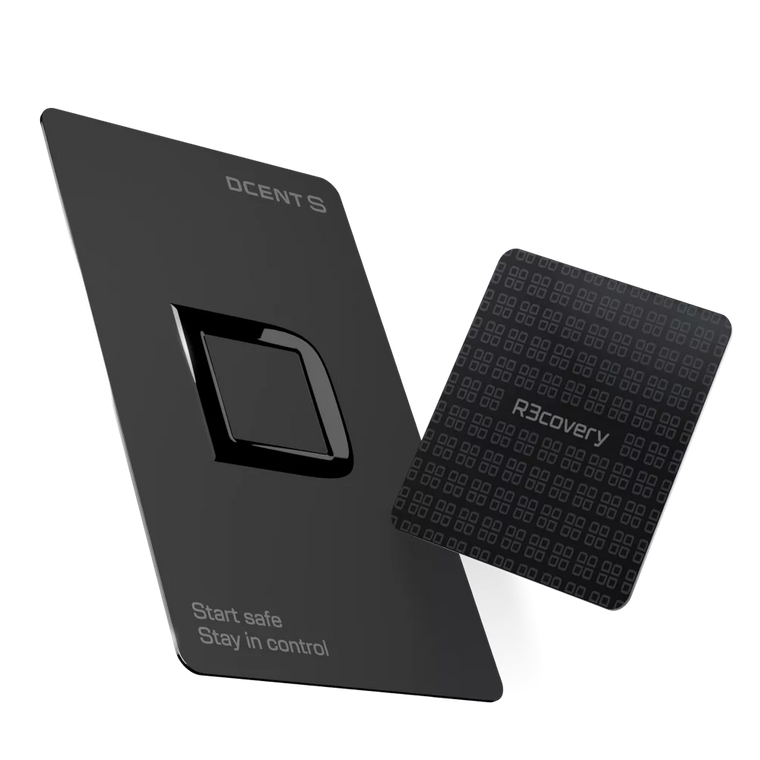
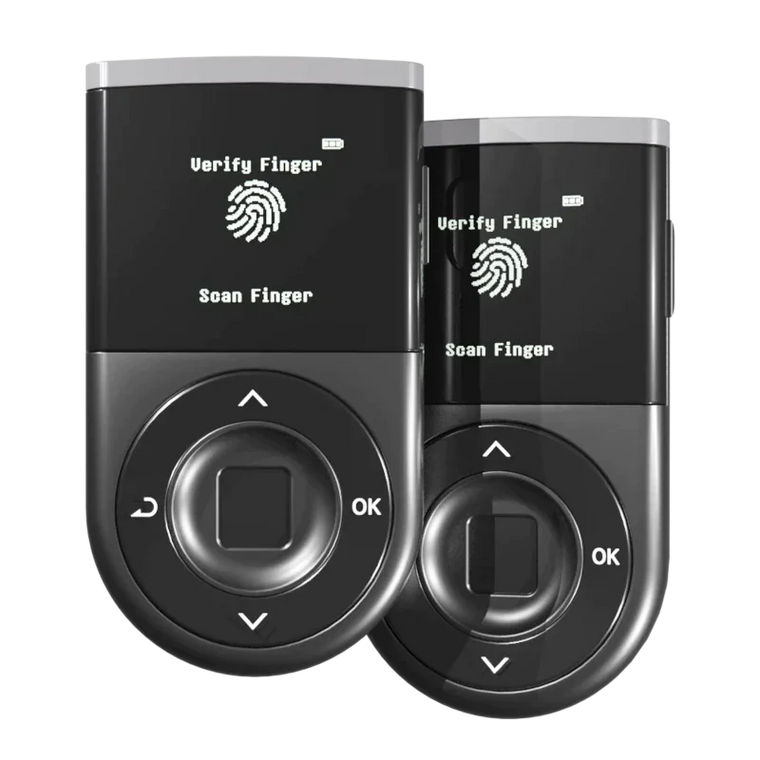
DCENT S supports a seedless setup. You can start without ever writing down the 24 words, and the keys are handled inside the card's secure chip, never shown on screen. (If you prefer, you can still choose to generate and confirm a seed yourself.)
In short, seedless dramatically reduces the very risk of "storing it digitally and having it leak."

But Even Seedless Still Needs a Backup
Here's something many people miss. Seedless doesn't mean you don't need a backup.
Lose or damage your card, and you still need a way to start over. The catch is that the backup method differs from wallet to wallet.
The 'spare card' trap
Some card wallets back up with a 'spare card' that copies the same key. Convenient, but lose all of those cards and there's no way to recover.
So seedless alone isn't enough. The real difference comes down to how the backup works.
What Is "Two-Way" Backup? The R3covery Approach
DCENT S designed its backup to be bidirectional. The main card (DCENT S) and the backup card (R3covery) recover each other.

Lose the main, or lose the backup
Lose the main card and you restore with R3covery; lose the backup card and you restore with the main. With just one of them, you can start again anytime. Losing one card doesn't end things.
No paper, no digital, no extra purchase
No copying your seed onto paper, no risk of storing it digitally, and no buying a backup card separately. It's solved inside the box from the start.
Want to see how it works?
🌱 Today's Practice — 3 Checks
Is your seed stored "digitally" right now? If it's in a photo, the cloud, or a notes app, it's time to move it offline.
Did you put your seed in a password manager? That's the LastPass lesson. Convenience can turn into vulnerability.
Do you have only "one" backup? Check whether your setup survives losing just one.
❓ Quick Quiz
In the LastPass case, what was the real reason people's assets disappeared?
① The wallet app was hacked ② The seed phrase was stored digitally (in a password app) ③ A network error
Show answer
② The seed phrase was stored digitally. The wallet itself was fine. What was breached was "where the seed was kept, digitally." That's why where and how you store it is everything.
Crypto Doesn't Forgive Mistakes
Why one wrong address or a single missing tag can't be undone, and how to prevent those mistakes.
DCENT S · Card-type cold wallet
Carry it daily, Recover it always
Seedless setup · R3covery backup card included · 100+ networks · 4,900+ assets
Meet DCENT S →Keep it safe. Use it freely.