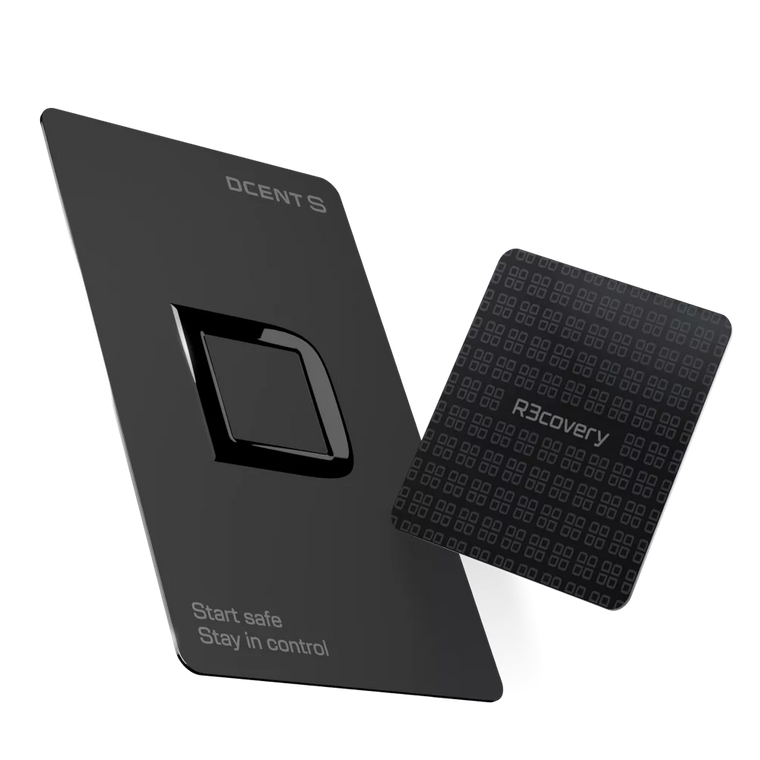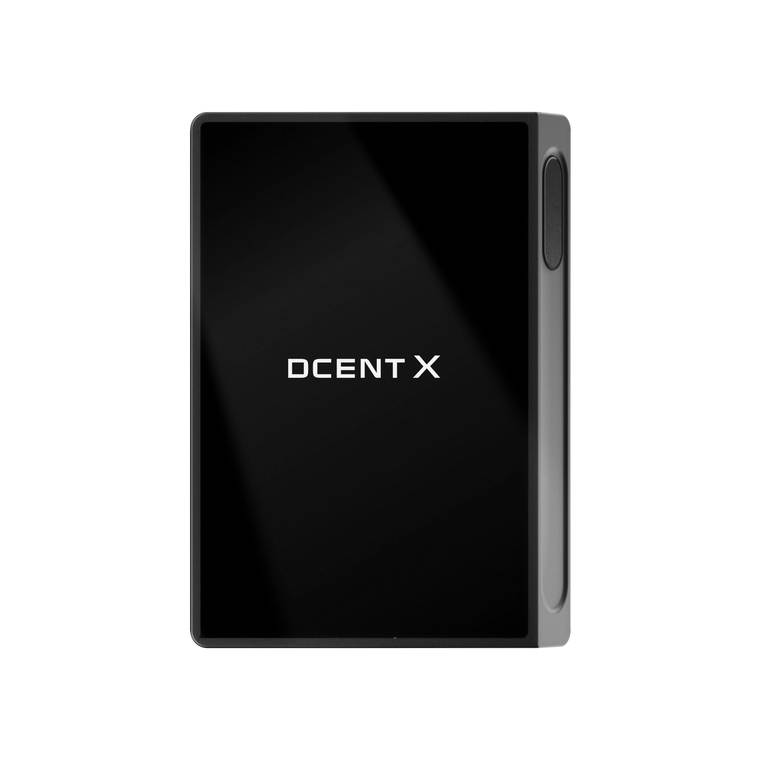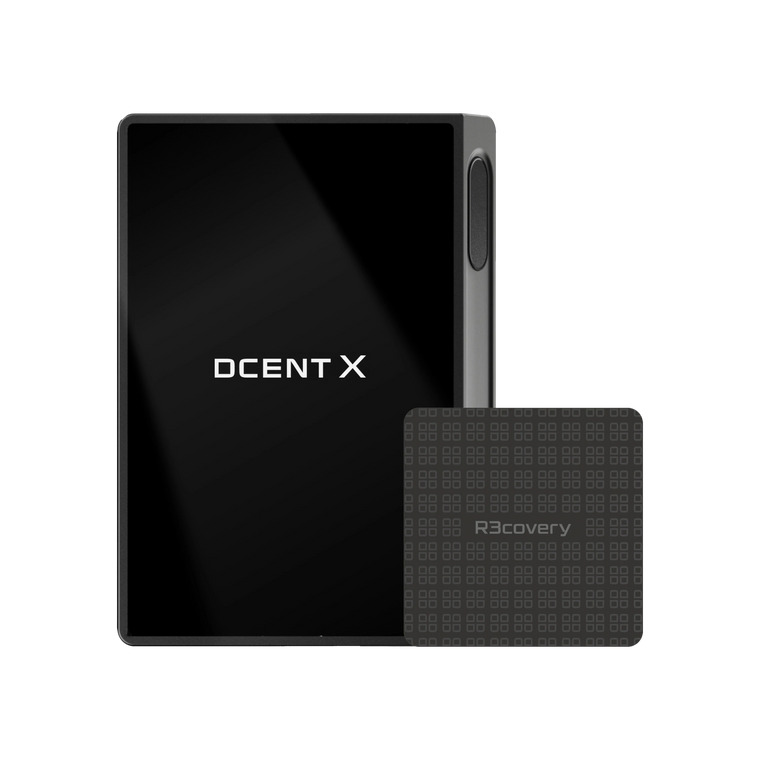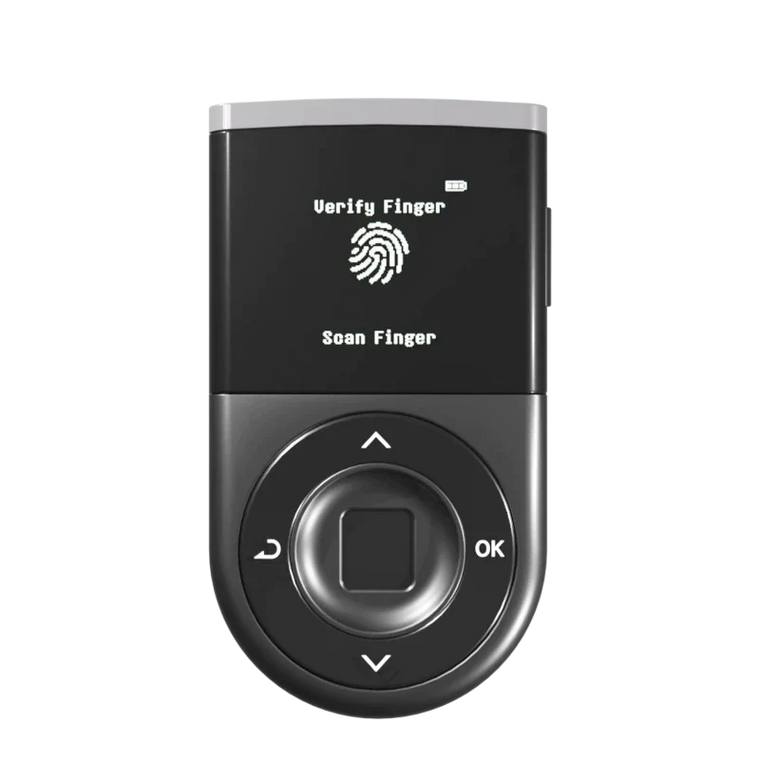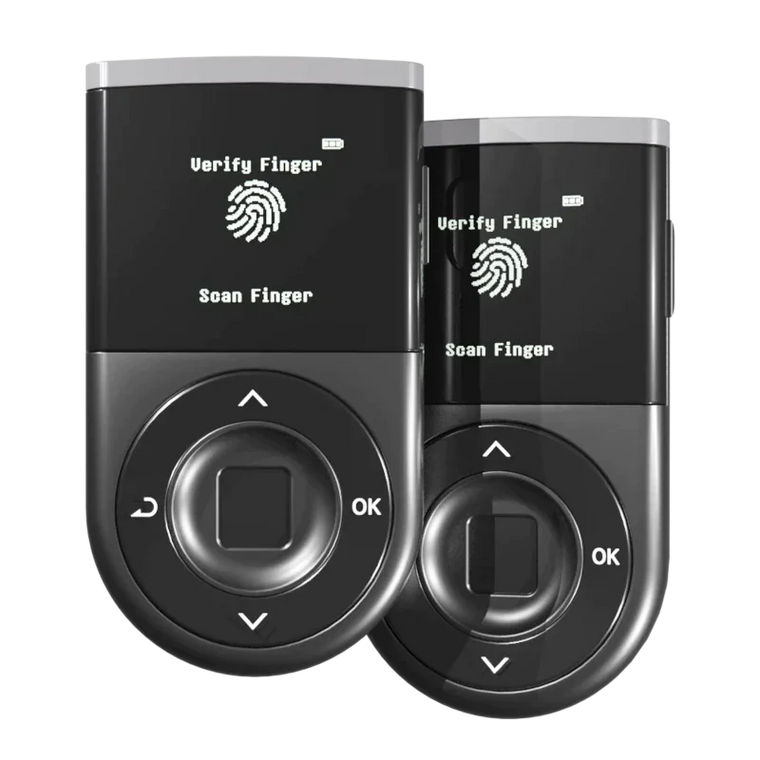







Every time you receive crypto, most wallets show you the same address — over and over. It's convenient. But on a public blockchain, reusing one address quietly builds a profile of everything you do. D'CENT just added an opt-in way to change that: HD multi-address.
Why reusing one address hurts your privacy
Public blockchains like Bitcoin are transparent by design: anyone can look up an address and read its full history. That's great for auditability — and awkward for personal privacy. When every incoming transaction lands on the same receiving address, a few things get easier for anyone watching the chain:
- Profiling — all your incoming activity lines up in one place, making it simple to estimate how much you hold and how often you transact.
- Targeting — a visible balance can turn everyday users, not just large holders, into targets for phishing and social engineering.
- Counterparty mapping — reuse makes it easier to connect who paid you and when, linking you to the people and services you deal with.
The official Bitcoin project even recommends using a new address for every transaction as basic privacy practice (Bitcoin.org — Protect your privacy). Researchers have long shown the opposite risk: reused addresses can be clustered to link activity back to one entity (Reid & Harrigan — An Analysis of Anonymity in the Bitcoin System).
What HD multi-address actually does
Without it (default): every deposit lands on the same receiving address. Simple, but everything you receive is tied together in one place.
With it on: each time you go to receive, your wallet offers a different address from a set it manages for you — so your deposits spread out instead of concentrating on one.
All your funds stay in one wallet
Multiple addresses don't mean multiple balances. Every address belongs to the same wallet, and your total is exactly what it was.
Nothing to manage manually
The wallet decides which address to show. There are no extra steps when you send or receive.
For Bitcoin-family coins
This is a UTXO-chain feature. It doesn't change how EVM or other networks behave in your wallet.
Where this sits in the privacy landscape
Privacy in crypto is a stack, not a single switch. Being honest about where HD multi-address fits is the whole point:
- Protocol-level privacy (Zcash shielded via zk-SNARKs; Monero via ring signatures and RingCT) — cryptographically hides amount, sender, and receiver.
- Stealth addresses (Monero, Umbra) — the sender derives a one-time address for the receiver.
- Address hygiene / rotation — avoids concentrating your activity on a single address. This is where HD multi-address sits.
Why privacy — and why now
Financial privacy has gone from niche to one of crypto's strongest narratives. Privacy-focused assets surged roughly 288% across 2025, outperforming every other sector — Monero touched an all-time high near $800 in January 2026, and Zcash rallied past $585 in May on high-profile institutional interest.
The numbers point to a bigger shift: more people now treat financial privacy as a default expectation, not a fringe want. They've realized a fully public ledger lets anyone read their balance, their history, and who they deal with — and they want to close that gap. Even as regulators tighten the rules on privacy assets (Coinbase delisted several in 2026; the EU restricts them from 2027), the demand keeps growing — which is exactly why holding your own keys matters.
Here's how we see it at D'CENT. We started as a hardware wallet built for security — keeping your keys offline and in your hands. But privacy and security aren't separate goals.
That's the thinking behind HD multi-address — and it's only the first step. As privacy becomes central to how people hold crypto, we're leaning further in: stronger privacy hygiene today, and support for more privacy-focused assets as our community asks for it.
ByteTree — The growing demand for financial privacy
CCN — Countries restricting privacy coins (2026)
How to turn it on
It's off by default and lives in the app's experimental settings.
Open the D'CENT app.
Go to Settings → Laboratory.
Switch HD multi-address to ON.
Create or open a Bitcoin-family account, then send and receive as usual.
Your receive screen will start offering rotating addresses, and a status badge will confirm when it's active. To go back, just switch the toggle off — that only changes whether the app shows you rotating addresses. It never affects your assets.
Mistakes to avoid
- Treating rotation as anonymity. It reduces linkability; it doesn't make you anonymous or hide how much you moved.
- Reusing an old address out of habit. After enabling it, share the current address your app shows for each new transaction.
- Assuming it covers every coin. It applies to Bitcoin-family (UTXO) coins only.
- Expecting hidden balances. Amounts stay visible on-chain — this changes address grouping, not disclosure.
- Skipping the final check. Always verify the address and amount on your device before you sign.
❓ Quick Quiz
What's the main privacy benefit of HD multi-address?
① It hides your transaction amounts ② It spreads deposits across multiple addresses so activity is harder to group ③ It makes you fully anonymous
Show answer
② It spreads deposits across multiple addresses. That reduces how easily your activity can be grouped under one address. It does not hide amounts or make you anonymous — those need protocol-level privacy.
FAQ
Q: Do transactions to my old address still work?
A: Yes. Older addresses still belong to your wallet, and their balances are fully included. Nothing is lost by turning this on.
Q: Will the changing address confuse whoever's paying me?
A: Just share the current address your app shows for each transaction. Funds sent to any of your addresses arrive in the same wallet, safely.
Q: Do I have to use it?
A: No. It's off by default and entirely optional. With it off, your wallet behaves exactly as before.
Q: Which coins does it apply to?
A: Bitcoin-family (UTXO) coins. EVM and other networks are unaffected.
Q: Does turning it off delete anything?
A: No. The toggle only controls whether your app shows you rotating addresses. Your assets are never affected.
Q: Does this make my transactions anonymous?
A: No. It reduces how easily your activity can be grouped under one address, but amounts stay public and it isn't the same as protocol-level privacy.
Q: Is my balance split across the addresses?
A: No. All addresses share one wallet balance. Your total is unchanged; only where deposits land is spread out.
D'CENT · Security meets privacy
Your keys, your privacy — in your hands
Biometric cold storage · 100+ networks · 4,900+ assets · privacy-minded by design
Explore D'CENT →Keep it safe. Use it freely.