






Key Answer: Bitcoin has dropped 47% from its all-time high, and the Fear & Greed Index has remained in "Extreme Fear" territory for 46 consecutive days (scoring as low as 5 out of 100). The 2026 crypto crash is not a single event — it's the result of five overlapping macro pressures hitting simultaneously: trade war tariffs, geopolitical conflict, AI-driven tech stock sell-offs, delayed Fed rate cuts, and a record $13.5 billion derivatives expiry. A hardware wallet won't reverse the market, but it can reduce the risk of your assets being locked, liquidated, or lost on an exchange during the chaos — though no tool eliminates risk entirely, and the final safeguard always lies with you.

30-Second Summary
What you need to know
- Market Status: BTC is down 47% from ATH. Sentiment is at historic lows: 46 straight days of Extreme Fear.
- Five Macro Triggers: Tariffs, Iran-US conflict, AI fear, Fed inaction, and a $13.5B derivatives expiry are driving the crash.
- Exchange Risk: During crashes, exchange users face forced liquidations and potential withdrawal freezes — custody risk compounds under stress.
- Self-Custody Solution: A hardware wallet gives you direct control of your keys, regardless of market conditions.
Keep reading for the full breakdown and a practical protection checklist.
What's Actually Driving the 2026 Crypto Crash?

If you've opened your portfolio app in March 2026 and felt a jolt of anxiety — you're not alone. Bitcoin has shed nearly half its value from its all-time high. But headlines like "crypto is crashing again" don't explain why. Let's break down the five real forces behind this downturn.
1. The 15% Global Tariff Shock
In early 2026, the United States announced sweeping 15% tariffs on a broad range of imports. Markets reacted immediately. Risk assets — stocks, tech, and crypto — all fell together as investors braced for higher prices, slower growth, and the kind of inflation that makes central banks hesitant to cut rates.
According to Reuters, the tariff announcement triggered the sharpest single-week selloff across emerging market assets since 2022. Crypto, which increasingly trades alongside macro risk assets, was swept up in the same current.
2. Iran–US Military Escalation
On February 28, tensions between Iran and the United States escalated into direct military conflict. Within 24 hours, Bitcoin dropped sharply to around $63,000 — and over $300 million in leveraged positions were forcibly liquidated in a single day.
Geopolitical shocks don't just scare investors — they trigger stop-loss cascades and margin calls across the derivatives markets. When big bets unwind suddenly, prices drop fast and hard.
3. AI Fear and Tech Sector Contagion
A wave of concern has spread through the tech sector: if artificial intelligence compresses software profit margins dramatically, what does that mean for the growth valuations that have supported markets since 2023? As AI-related earnings anxiety hit Nasdaq-listed tech stocks, traders who hold both equities and crypto began selling both.
CoinDesk has reported on the increasing correlation between crypto assets and Nasdaq performance — a relationship that benefits crypto during bull runs but accelerates losses when tech sentiment turns negative.
4. Fed Rate Cut Expectations Reversed
Throughout 2025, many investors were pricing in Federal Reserve rate cuts by early 2026. Those expectations have since been pushed back, largely because of the inflationary pressure from new tariffs. Higher-for-longer interest rates mean the cost of holding speculative assets rises — and capital tends to rotate toward yield-bearing instruments like bonds instead.
5. $13.5 Billion Derivatives Expiry (March 27)
On March 27, 2026, the crypto derivatives market saw $13.5 billion in quarterly options and futures expire simultaneously. Quarterly expiries are known to create price volatility as traders close, roll, or hedge positions. When this event overlapped with already-depressed sentiment, it amplified downward pressure.
Is Crypto Always This Volatile?

Short answer: crypto has always been volatile. But context helps.
Every major crypto cycle has included drawdowns of 50–80% from peak to trough. The 2018 bear market saw Bitcoin fall 84% from its high. The 2022 crash — triggered by the collapse of Terra/Luna and later FTX — erased over $2 trillion in market cap.
What's different in 2026 is the combination of factors hitting at once: macro headwinds, geopolitical risk, tech sector anxiety, and a high-leverage derivatives environment. Each of these alone would cause turbulence. Together, they compound.
The important takeaway is not "crypto is dead" — it never is. It's that volatility creates real risk for holders whose assets are tied up in systems outside their direct control.
What Can You Actually Do During a Crypto Crash?

Panicking rarely helps. But there are practical, calm steps you can take right now.
1. Don't Make Emotional Decisions in Real Time
Selling during a crash locks in losses. History shows that most people who sell at the bottom miss the recovery. If your investment thesis hasn't changed, the current price doesn't mean your decision was wrong. Review your position with a clear head.
2. Check Your Exchange Exposure
During the 2022 FTX collapse, millions of users found their funds frozen overnight — not because they had done anything wrong, but because the platform failed. During periods of extreme market stress, exchange withdrawal limits and technical issues become more common.
This isn't a reason to assume every exchange will fail. But it is a reason to think about how much of your portfolio is held in environments you don't directly control.
3. Review Your Leverage
If you're holding leveraged positions, understand your liquidation price. The $300 million in forced liquidations triggered by the Iran-US conflict happened in hours. Reducing or eliminating leverage during high-volatility periods is a straightforward risk reduction step.
4. Hold Only What You Need on Exchanges
Exchanges are useful for trading. They're less suitable for long-term storage, especially during market stress. The general principle among experienced holders: keep what you're actively trading on exchanges, and move longer-term holdings to a solution you control directly.
Should You Move Your Crypto Off Exchanges During a Crash?

This question comes up every time markets get rough — and it's worth answering clearly.
When you store crypto on an exchange, the exchange holds the private keys (the cryptographic proof of ownership). You have an account balance, but not direct custody of the underlying asset. This creates a dependency: if the exchange freezes withdrawals, is hacked, becomes insolvent, or limits access during a crisis, your ability to move your funds is constrained by their systems, not yours.
Self-custody means you hold your own private keys. No exchange can freeze, restrict, or lose access to your funds. You are the sole custodian.
What a Hardware Wallet Does (and Doesn't Do)
A hardware wallet is a physical device that stores your private keys offline, in an isolated secure chip that never connects directly to the internet.
What it does:
- Keeps your private keys off exchange servers and off internet-connected devices
- Requires physical confirmation (fingerprint or button press) to approve every transaction
- Reduces the risk of remote key theft significantly
What it doesn't do:
- It won't protect you if you approve a fraudulent transaction yourself
- It won't reverse a market crash
- It's not a substitute for understanding what you're signing
The hardware wallet is a key risk-reduction tool — not a guarantee. The final check always comes from you.
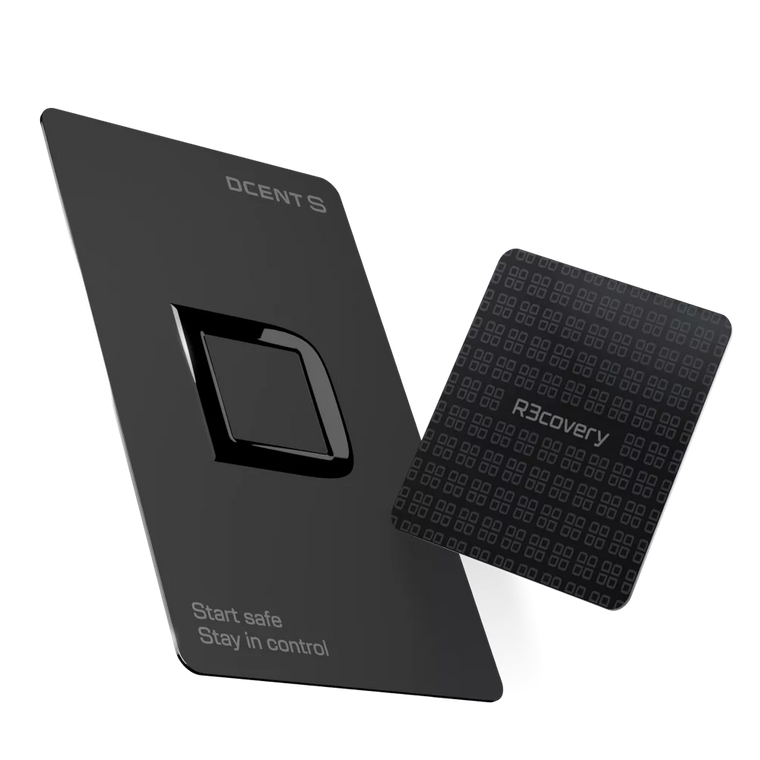
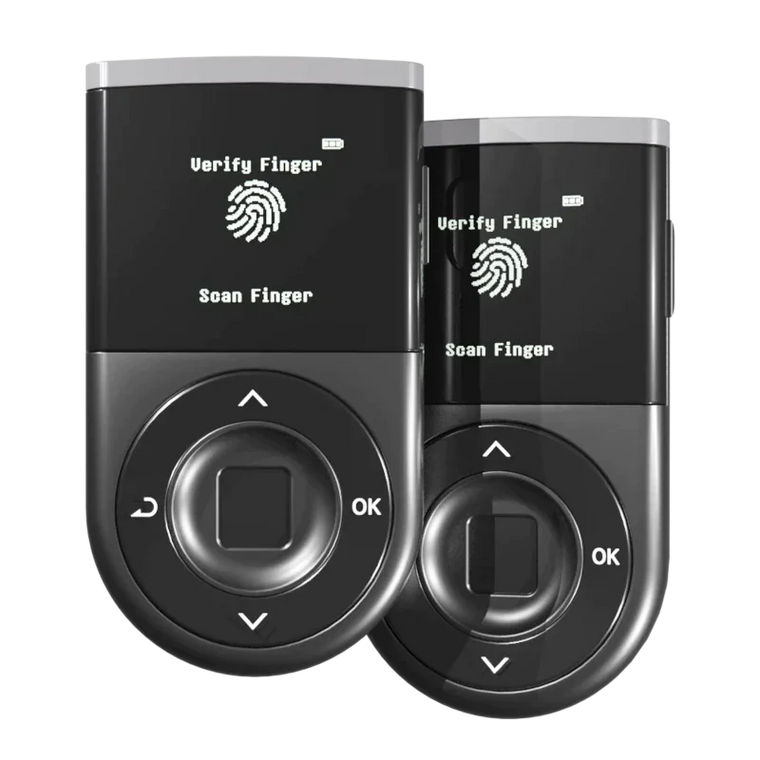
D'CENT Biometric Wallet: Self-Custody Built for Real-World Use
If you've decided to explore self-custody, D'CENT's Biometric Wallet is designed for both security depth and everyday usability.
Key specs:
- EAL5+ Secure Element (ST33 chip) — the same security grade used in passport microchips and banking smartcards. Private keys are isolated inside the chip; even the firmware cannot extract them.
- Biometric authentication — fingerprint access in 0.5 seconds, with no PIN required. The fingerprint template never leaves the secure chip.
- Clear Signing (WYSIWYS) — every transaction displays recipient address, amount, and network on the device screen. You confirm exactly what you're signing, not an abstract hash.
- 100+ blockchain networks, 4,800+ tokens supported
- Real-time threat detection via Blockaid — active pre-transaction simulation on 50+ chains, flagging malicious contracts and phishing addresses before you sign
- 0 security breaches since 2018
D'CENT reduces the risk that your private keys are exposed to remote attacks — but it cannot prevent you from approving a transaction that turns out to be fraudulent. Always verify what you're signing on the device screen, and treat any unexpected approval request with suspicion.
Ready to protect your crypto during the downturn?
D'CENT Biometric Wallet — EAL5+ security, 100+ chains, 0.5s fingerprint unlock.
Crypto Crash Protection Checklist
- Review how much of your portfolio is held on exchanges vs. in self-custody
- Check your leverage positions and know your liquidation price
- Confirm your recovery phrase (Recovery Phrase) is stored offline, in writing — not in a photo or cloud service
- Verify your hardware wallet firmware is up to date
- Review and revoke unnecessary token approvals (Approvals) on connected DApps
- Avoid making large moves based on hourly price changes
- Check withdrawal limits on exchanges you use actively
- Make sure a trusted person knows how to access your self-custody setup in an emergency
FAQ
Q1: Why is crypto crashing right now in 2026?
A: The 2026 crypto crash is being driven by five overlapping macro pressures: a 15% global tariff shock triggering inflation fears, Iran-US military escalation causing $300M in forced liquidations, AI-driven tech sector anxiety, Federal Reserve rate cuts being pushed back, and a record $13.5 billion derivatives expiry on March 27. None of these alone would cause this scale of downturn — the combination has sustained Extreme Fear levels for 46 consecutive days.
Q2: Why is Bitcoin falling when it was so high recently?
A: Bitcoin reached a new all-time high going into 2026, then pulled back sharply — currently sitting 47% below that peak. This pattern has repeated in every major cycle. Post-ATH corrections of 40–80% are historically common in crypto. The macro environment in early 2026 has accelerated and deepened the typical pullback.
Q3: Is this the end of crypto?
A: Not according to historical precedent. Bitcoin and the broader crypto market have experienced multiple 50–80% drawdowns and recovered each time. The 2018 crash, the 2020 COVID crash, and the 2022 collapse all produced "is crypto dead?" headlines — followed by recovery cycles. That said, no investment is guaranteed to recover, and past performance doesn't predict future outcomes.
Q4: Should I sell my crypto during a crash?
A: This is a personal financial decision that depends on your investment horizon, risk tolerance, and financial situation. We don't offer investment advice. What we can say: selling during a crash locks in losses at the lowest point. Many experienced long-term holders use drawdowns as a time to review their security setup — not necessarily their position — and ensure their assets are protected regardless of price.
Q5: Can I lose my crypto on an exchange during a crash?
A: Exchange insolvency is a real risk, as demonstrated by the 2022 FTX collapse which froze billions in customer funds. During market stress, some exchanges also implement withdrawal limits or experience technical failures. Using an exchange doesn't mean you will lose funds — but it does mean your access depends on that platform's continued operation and solvency.
Q6: What is self-custody and do I need it?
A: Self-custody means holding your own private keys — the cryptographic proof of ownership over your crypto — rather than relying on an exchange to hold them for you. A hardware wallet is the most common self-custody tool. Whether you need it depends on how much you hold, how long you plan to hold it, and how comfortable you are with the platform risk of exchanges.
Q7: How does a hardware wallet help during a crash?
A: A hardware wallet doesn't affect market prices. What it does is remove your assets from exchange custody — meaning exchange failures, withdrawal freezes, or platform-level hacks don't affect your holdings. Your private keys remain in a secure chip on your physical device, accessible only to you via biometric or PIN authentication.
Q8: Is D'CENT a good hardware wallet for beginners?
A: D'CENT's Biometric Wallet supports 100+ blockchains and 4,800+ tokens, uses fingerprint authentication instead of PIN codes, and includes real-time scam detection via Blockaid. It's designed to be accessible to new users while maintaining EAL5+ security standards. That said, any hardware wallet requires careful handling of your Recovery Phrase — the 24-word backup that restores access if your device is lost or damaged. Store it offline and never share it.
Sources & References
Bottom Line
The 2026 crypto crash is real, uncomfortable, and driven by genuine macro forces — not just market noise. Five overlapping pressures have pushed Bitcoin 47% below its ATH and kept sentiment in Extreme Fear for nearly seven weeks.
The most useful thing you can do right now isn't to predict where prices go next. It's to make sure your assets are protected regardless of what happens — on exchanges, with your keys, and with your Recovery Phrase.
Self-custody is one step in that direction. It doesn't stop the market from falling. It does mean that when the market eventually turns, your holdings are where you left them — under your control.
Self-Custody Starts Here
Protect Your Crypto with Fingerprint + Threat Detection
100+ blockchains · 4,800+ tokens · EAL5+ Secure Element · Blockaid real-time scanning · 0.5s fingerprint unlock · Zero breaches since 2018
See D'CENT Biometric Wallet →